What are natural and artificial satellites?
The difference between a natural satellite and an artificial satellite is that a natural satellite is a celestial body in space that revolves around a larger body, just like the Moon revolves around the Earth.
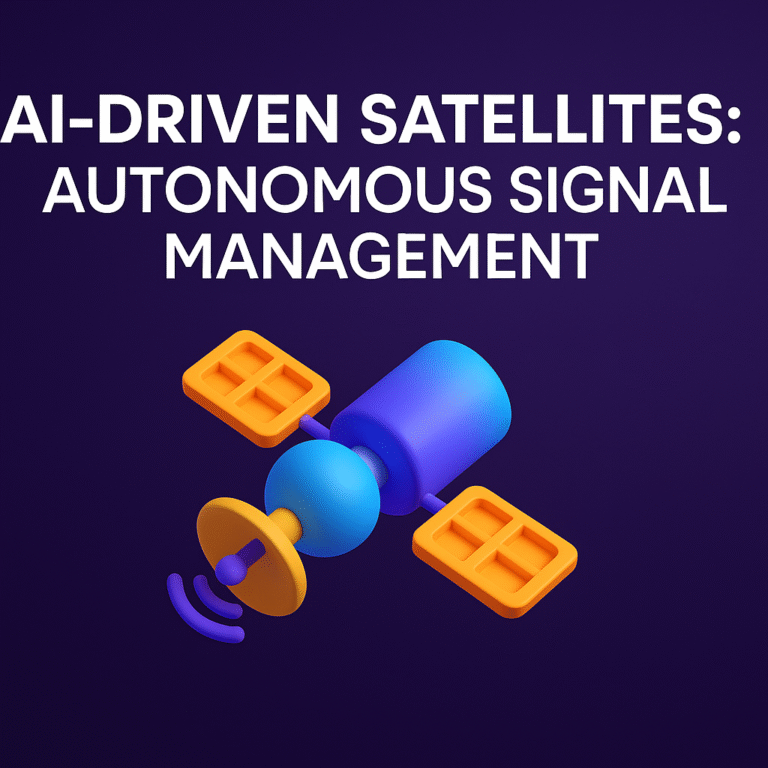
An artificial satellite is a man-made machine that is launched into space or Earth orbit for data collection, communication, and other purposes.
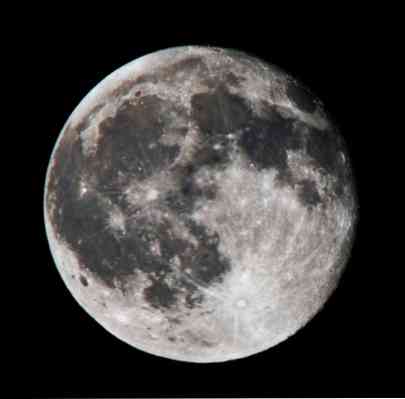
By satellite we mean any object that orbits another, larger object, and usually when someone mentions the word “satellite” they are referring to a machine..
The first artificial satellite launched into space was called Sputnik 1 and was created by the Soviet Union in 1957.
Some satellites in history
Sputnik 1 was about the size of a basketball, weighing about three and a half kilograms. It remained in orbit until January 8, 1958, when it burned up after re-entering the atmosphere. The signal it gave off allowed measurements of ion concentrations and other important data.
In 1958, NASA launched its first satellite, Explorer 1. The first recorded image of Earth was taken in 1959 by one of its successors, Explorer 6.
In 1969, the United States launched a space mission called Apollo 11, which became the first manned flight to the surface of the Moon.
Currently, according to the UCS satellite database, there were 1,459 active satellites in orbit around the Earth in 2016. Of these, 593 belong to the United States, 192 to China, 135 to Russia, and 539 to other countries.
In 2016, NASA’s Space Debris Program Office found about 17,817 pieces of space debris in orbit. If you include objects smaller than 10 cm in low-Earth orbit, that could be as many as 750,000 pieces of debris that pose a risk of impacting operational satellites.
The oldest satellite still in orbit is Vanguard 1, launched in 1958. Satellites vary in size depending on their function: the largest satellite currently in existence is the International Space Station, and NASA’s smallest satellite weighs 64 grams and was created with a 3D printer, although it only lasts 12 minutes in zero gravity.
Below are some of the differences, characteristics, functions, and types of each natural and artificial satellite.
Natural satellites
They are created by nature, they are not controlled by people, they are permanent, they cannot be manipulated or used for communication.
Natural satellites can be thought of as planets, comets, and asteroids that orbit stars, such as the eight planets in Earth’s solar system, as well as many other smaller planets, comets, and asteroids that orbit the Sun. They remain in orbit due to the gravitational attraction between the satellite and another object.
Similarly, the Moon is a satellite of the Earth; Phobos and Deimos of Mars; the principal satellites of Jupiter are Io, Europa, Ganymede, and Callisto, in addition to another 69 that have been discovered; of Neptune, Proteus, Triton, and Nereida; the Earth, Venus, and Jupiter are satellites of the Sun; Saturn has 62 satellites and Uranus 27.
Natural satellites provide relevant information about the evolution, operation, and origin of your system, which provide clues to understanding the formation of solar systems.
Types of natural satellites
There are two types of satellites in the solar system. According to their orbits, they are divided into regular and irregular.
Regular satellites
These are those that rotate around an object in the same sense in relation to the Sun. For example, the Moon rotates from east to west, and so does the Earth, that is, it is regular because it moves synchronously.
Irregular satellites
Their orbits are elliptical, highly inclined and far from their planets. It is believed that they were not formed in their orbits, but were captured by gravitational attraction.
Natural satellites are divided into four types: pastoral satellites, which hold a ring of some planet in its position; Trojan satellites, which are those asteroids that occupy the Lagrange points L4 and L5; orbital satellites, which are those that revolve in the same orbit; and asteroidal satellites, which are some asteroids with satellites around them.
Artificial satellites
They are man-made, controlled by humans, last for a certain amount of time, and can be used for communication and data collection.
Artificial satellites help observe large parts of the Earth, provide a clear view of space, capture images of other planets, make it easier to understand and study the universe, and much more.
At the same time, they represent an effective communication support that has influenced the development of communication technologies and signals such as television signals, telephone calls from anywhere on the planet, among others.
Most of these machines have two common parts: an antenna and a power source. Antennas are designed to send and receive information, and they can be powered by a battery or solar energy through panels that convert light into electricity.
They provide detailed information about clouds, air and oceans. They help to forecast weather, monitor volcanoes and fires. They allow to observe dangerous rays coming from the Sun, to explore planets, stars, asteroids and comets.
For many years, satellites have been used for military purposes, such as infrared sensors for tracking missiles, sensors for recording and listening to secret conversations, and optical elements for military surveillance.
Types of artificial satellites
The main division of its functions consists of: research satellites, applications, navigation, meteorology and communication. Their purposes can be very different. Some types that exist are:
Communication satellite
They are used in telecommunications, they provide fast transmission signals with an impact on the entire planet. They process the information of the source, who receives it.
Navigation satellite
One of the most commonly used is GPS. It transmits radio signals to display the location through an electronic receiver.
Meteorological satellite
They allow us to track climate change and measure meteorological conditions on other planets.
Constantly update atmospheric conditions and you can see storms, auroras, pollution effects, sea currents, energy flows and more.
Astronomical satellites
They are used to having readings and observing distant galaxies.
Killer satellites
They were designed to destroy satellites, warheads and enemy objects from space. The first satellite of this type began operating in 1973 and poses a threat to life on Earth.
links
- Allan MacInnes. Natural Satellites (2015). Retrieved from: sciencelearn.org.nz.
- Maya Inamura. World Space Week: From Science Fiction to Reality (2014). Source: aaas.org.
- Benjamin Elisha Sawe. Types of Satellites (2017). Source: worldatlas.com.
- Flint Wild. What is a Satellite? (2017). Source: nasa.gov.
- Natural satellite. Source: newworldencyclopedia.org
- Gaurav Rathi. What Satellites Do (2015). Source: digitalperiod.com
- UCS Satellite Database. (2017). Source: ucsusa.org.