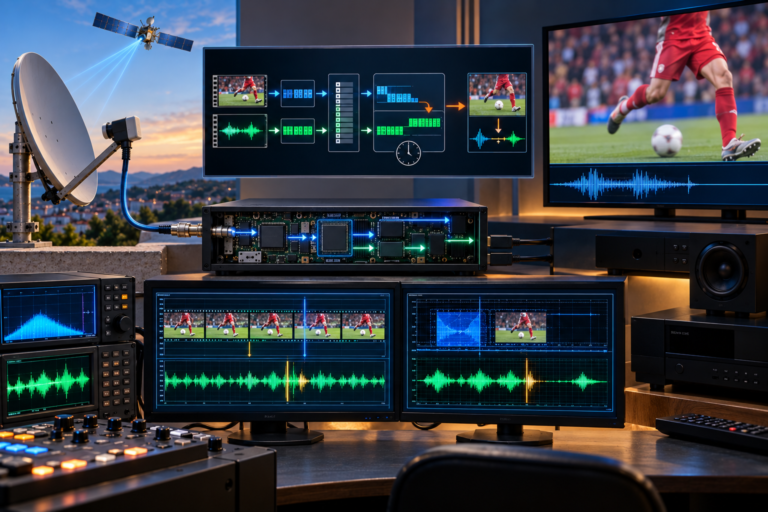
AI Predictive Maintenance 2026: Smarter Satellite Operations
AI Predictive Maintenance 2026: Smarter Satellite Operations
Estimated reading time: 8 minutes
In 2026, the use of artificial intelligence has evolved beyond data analysis and orbit control — it’s now keeping satellites alive longer than ever. The era of AI predictive maintenance is revolutionizing how we operate, monitor, and repair spacecraft in real time.
Instead of waiting for malfunctions to occur, AI systems detect early warning signs of component wear, thermal fluctuations, or power inconsistencies, allowing engineers to act before failures happen. This new approach is making space operations smarter, safer, and far more sustainable.
🤖 How Predictive Maintenance Works in Space
AI predictive systems gather data from thousands of onboard sensors — monitoring temperature, radiation, vibration, and current levels. Machine learning models then analyze this data to identify patterns of degradation invisible to human operators.
When a potential issue is detected, the system automatically schedules a corrective maneuver, adjusts power flow, or isolates faulty circuits to prevent cascade failures. These responses occur in milliseconds, far faster than any ground-based control could achieve.
⚙️ The Role of Machine Learning
Machine learning algorithms are trained on historical mission data to predict failures before they occur. For example, subtle changes in motor torque or temperature variation in solar panels can signal early-stage fatigue. AI models identify these anomalies instantly, reducing downtime and extending satellite lifespan by up to 50%.
This predictive intelligence also feeds back into manufacturing — enabling engineers to design future satellites that learn from the performance of their predecessors.
📡 Real-Time Diagnostics and Remote Autonomy
Modern constellations like OneWeb and Starlink are already implementing AI-based diagnostic systems that run continuously in orbit. These systems use neural networks to prioritize maintenance tasks based on mission criticality and available resources.
For example, if two satellites experience thermal stress simultaneously, AI can autonomously redistribute power loads to maintain system balance — effectively creating a self-healing satellite network.
🌍 Impact on Broadcasting and Connectivity
For the broadcasting and IPTV industries, predictive maintenance ensures uninterrupted uptime. AI keeps communication satellites running smoothly by preventing signal degradation and optimizing frequency allocation. The result: fewer outages, stable HD streaming, and minimal latency during live events.
This makes AI maintenance not just a technical advancement, but a direct improvement to everyday user experience in digital media and global communication.
🟨 Reality Check
While predictive maintenance is revolutionary, it depends on vast data availability and high processing power. Smaller operators without AI infrastructure may struggle to implement such systems effectively.
There’s also the challenge of data security — autonomous diagnostics require deep access to satellite systems, raising the risk of cyber interference if not properly protected. However, ongoing development in quantum encryption and edge AI chips is rapidly resolving these limitations.
🚀 The Future of Autonomous Satellite Operations
By 2027, most commercial satellites will include predictive AI modules capable of self-diagnosis and autonomous recovery. The goal is to create fleets that operate independently, repairing themselves and sharing performance data across constellations.
This shift will lead to longer missions, reduced waste, and unprecedented reliability — forming the foundation for an interconnected and intelligent orbital ecosystem.
🟥 Final Verdict
AI Predictive Maintenance 2026 represents the next phase of smart space operations. By combining automation, analytics, and proactive care, satellites can now protect themselves — ensuring performance continuity for years to come.
It’s not just maintenance — it’s evolution in motion. The space industry is no longer reactive; it’s self-aware, self-sustaining, and smarter than ever.