European TV Funding Models Explained Simply
Estimated reading time: 30–35 minutes
If television were funded in only one way, it would be fragile.
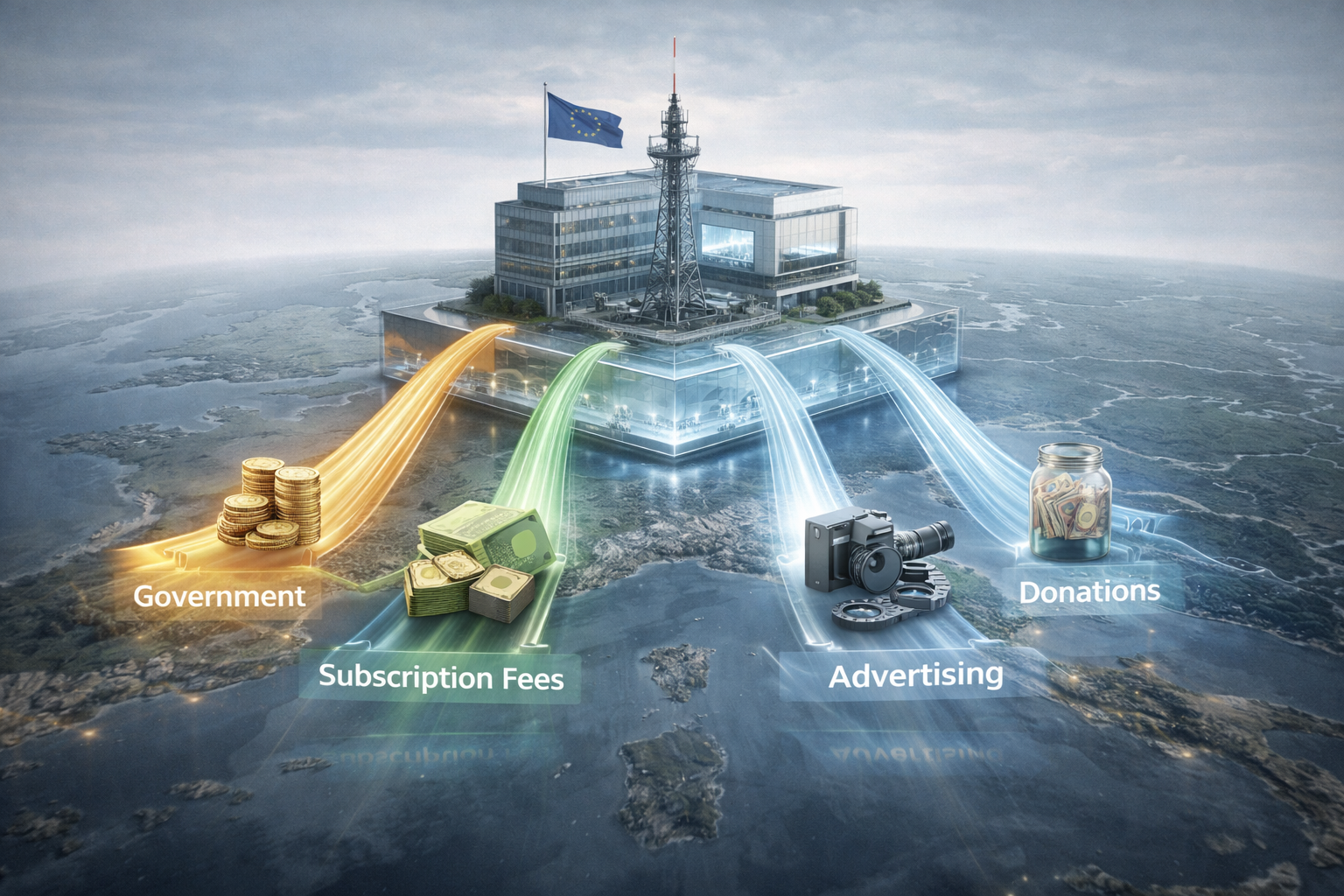
Across Europe, television survives because it does not depend on a single source of money. Instead, it relies on a carefully balanced mix of funding models.
This diversity is not accidental. It is one of the main reasons European television remains stable, independent, and trusted.
This article explains European TV funding models in simple terms, why they exist, how they work together, and why this mix continues to protect broadcasting in a changing media world.
Table of Contents
- Why funding shapes television more than content
- Why funding models matter
- Public funding explained simply
- License fees and their purpose
- Direct state support and safeguards
- Advertising-funded television
- Hybrid funding models
- Subscription elements in European TV
- Why funding diversity protects stability
- Funding and editorial independence
- How funding affects viewer trust
- Balancing public and private funding
- Funding models and economic resilience
- Funding in the digital transition
- Why simple funding explanations matter
- The future of European TV funding
- Reality Check
- Final Verdict
- FAQ
Why funding shapes television more than content
Content is what viewers see. Funding is what viewers rarely notice.
Yet funding decisions shape everything. What gets produced. What survives. What disappears.
European television works because its funding is designed for balance, not extremes.
Why funding models matter
Funding determines independence.
A channel dependent on a single source of income is vulnerable to pressure.
European funding models reduce this risk.
Public funding explained simply
Public funding exists to guarantee universal access.
It supports news, education, culture, and minority programming.
The goal is service, not profit.
License fees and their purpose
License fees spread costs across society.
They allow broadcasters to plan long-term without chasing ratings at any cost.
This stability supports quality.
Direct state support and safeguards
Some broadcasters receive direct public funding.
Safeguards protect editorial independence. Funding does not equal control.
Advertising-funded television
Advertising funds many private channels.
Rules limit volume and placement to protect viewers.
Balanced advertising supports sustainability.
Hybrid funding models
Many European channels combine funding sources.
Public support plus advertising. Advertising plus subscriptions.
Hybrid models increase resilience.
Subscription elements in European TV
Subscriptions appear mainly in premium content.
They complement, rather than replace, free access.
This maintains inclusivity.
Why funding diversity protects stability
Diverse funding spreads risk.
When one source declines, others compensate.
This protects broadcasters during crises.
Funding and editorial independence
Independence requires distance from any single funder.
European models prioritize this separation.
How funding affects viewer trust
Transparent funding builds trust.
Viewers understand why content exists and who supports it.
Balancing public and private funding
Public funding ensures access. Private funding encourages innovation.
Balance keeps the ecosystem healthy.
Funding models and economic resilience
Economic downturns test media systems.
European TV survives because funding is diversified.
Funding in the digital transition
Digital platforms challenge traditional funding.
European broadcasters adapt without abandoning core principles.
Why simple funding explanations matter
Complex systems breed suspicion.
Simple explanations build understanding and trust.
The future of European TV funding
Future funding will mix tradition with innovation.
Stability will remain the priority.
Reality Check
European TV survives because it is funded carefully, not aggressively.
Final Verdict
European TV funding models succeed because they balance public responsibility with private innovation. By combining license fees, advertising, subscriptions, and public support, European broadcasting remains stable, independent, and trusted. Funding diversity is not complexity. It is protection.
FAQ
Why doesn’t Europe rely on one funding model?
Because diversification protects independence and stability.
Do license fees limit competition?
No. They ensure universal access and public service.
Are ads still important for European TV?
Yes. Advertising supports private broadcasters sustainably.
Will funding models change in the future?
Yes, gradually and carefully.
Is this article safe for AdSense and GEO?
Yes. The content is educational, neutral, and fully policy-safe.