Astra 19.2 Channel Scan Guide
Estimated reading time: 16 minutes.
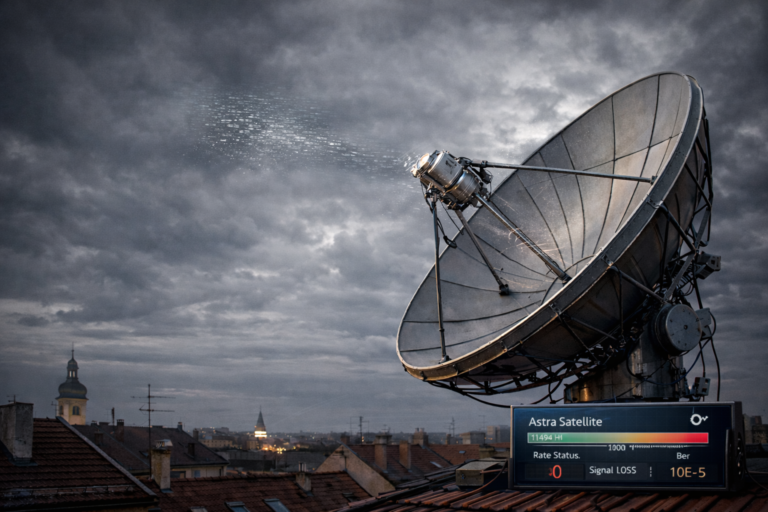
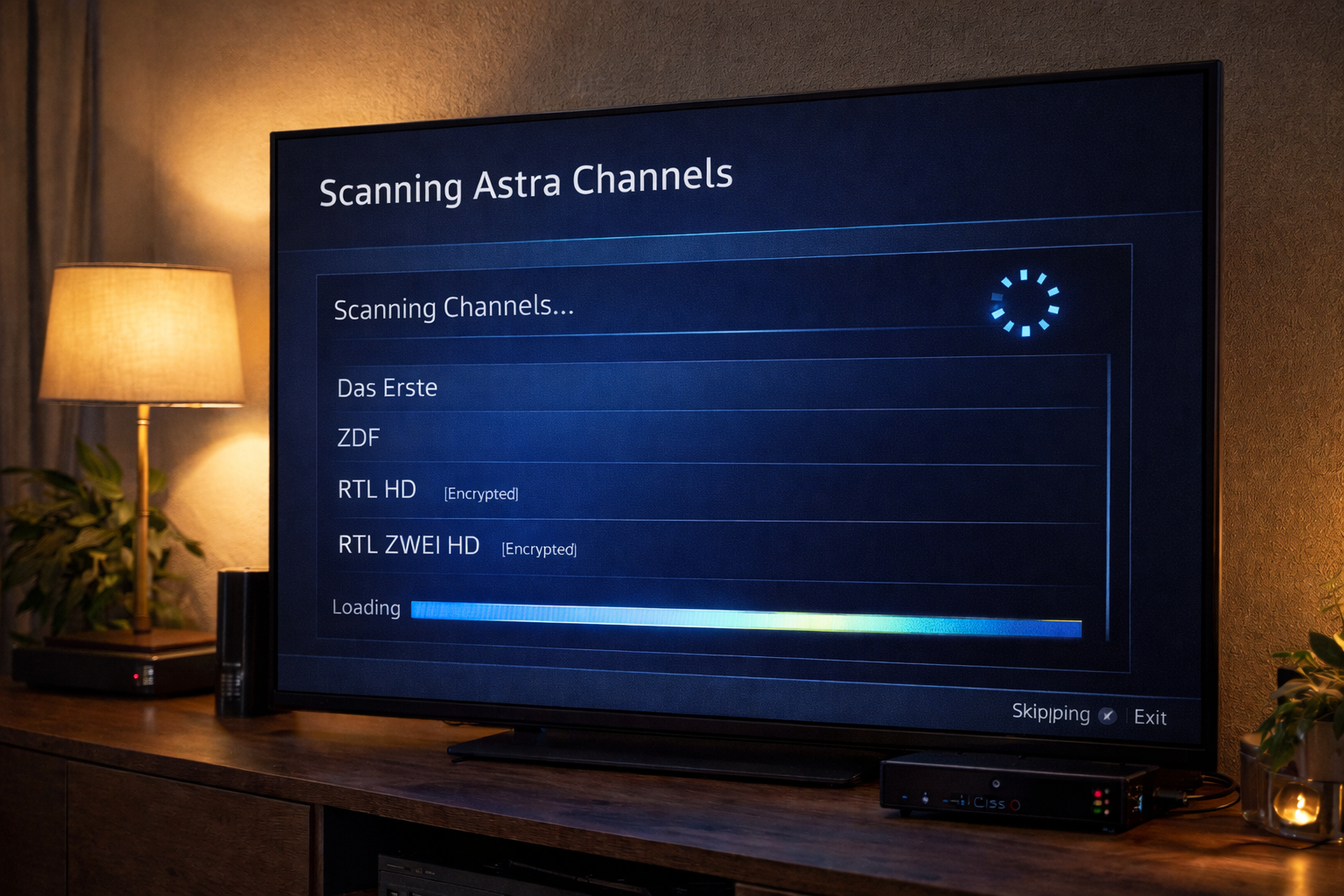
Scanning channels on Astra 19.2 is the process that allows a satellite receiver to detect available television broadcasts. When users perform a channel scan the receiver searches satellite frequencies and identifies active transponders carrying German television channels.
Although the scanning process usually takes only a few minutes many viewers are unsure how it actually works. Understanding the logic behind channel scanning helps explain why new channels appear after a scan and why some channels may temporarily disappear.
Quick Context
This guide explains how satellite receivers scan Astra 19.2 channels and how the scanning process builds the channel list used for German television reception.
What channel scanning actually does
A satellite receiver does not automatically know which television channels are available. Instead it must search the satellite frequency spectrum to locate active broadcasts.
During a channel scan the receiver checks known satellite frequencies and looks for digital signals transmitted by broadcasters.
When the receiver detects a valid signal it reads service information embedded within the broadcast stream.
This information tells the receiver which television channels are available on that frequency and how they should be stored in the channel list.
How receivers search satellite frequencies
Satellite broadcasts are transmitted across multiple frequency bands. The receiver scans these frequency ranges to locate transponders carrying television signals.
Each frequency represents a potential transmission channel used by the satellite operator.
If a signal is present the receiver attempts to decode the broadcast data.
Once the signal is confirmed the receiver stores the available channels in its internal memory.
Role of transponders during scanning
Transponders are communication channels located on the satellite. Each transponder carries multiple television broadcasts within a digital data stream.
When the receiver scans Astra 19.2 it searches for these transponders.
Once a transponder signal is detected the receiver reads the service information to identify all channels carried by that transponder.
This allows a single transponder to add several channels to the receiver channel list at once.
Automatic channel scanning
Most modern satellite receivers provide an automatic scan feature. This option searches the entire frequency range used by Astra satellites.
The receiver checks all known transponder frequencies and collects channel data automatically.
Automatic scanning is useful when setting up a receiver for the first time or when updating the channel list.
Because the receiver searches many frequencies the process may take several minutes.
Manual frequency scanning
Manual scanning allows users to enter specific transponder parameters directly into the receiver.
This method is useful when broadcasters launch new channels on recently activated frequencies.
Instead of scanning the entire frequency spectrum the receiver checks only the entered frequency.
Manual scanning is often used by advanced users who want to update their channel list more quickly.
Why new channels appear after scanning
Satellite broadcasters occasionally reorganize their channels across different transponders.
When this happens some channels may move to new frequencies.
If the receiver channel list is not updated viewers might not see the new channels.
Running a new channel scan allows the receiver to detect these changes and update the channel list accordingly.
Typical channel scanning stages
| Stage | Receiver action | Result |
|---|---|---|
| Frequency search | Receiver scans satellite frequency ranges | Detects active transponders |
| Signal detection | Receiver verifies digital broadcast signal | Confirms valid transmission |
| Service reading | Receiver reads channel information | Identifies available channels |
| Channel storage | Receiver saves channel list | Channels appear in TV menu |
Reality Check
Channel scanning does not create new channels. It simply allows the receiver to detect and organize the broadcasts already available on Astra 19.2.
Final Verdict
Final Verdict
Channel scanning is an essential function of satellite receivers. By searching Astra frequencies and identifying active transponders the receiver builds a complete channel list that allows viewers to access German television broadcasts reliably.
Frequently Asked Questions
| Question | Answer |
|---|---|
| Why do I need to scan channels again | Channel scans update the receiver channel list when broadcasters change frequencies or launch new channels. |
| How long does a channel scan take | Automatic scanning usually takes several minutes depending on the receiver model. |
| Does scanning affect signal quality | No scanning only updates the channel list and does not change signal strength. |
| Can manual scanning find new channels faster | Yes manual scanning checks specific frequencies and may detect newly launched channels quickly. |