How European Media Laws Protect Viewers and Broadcasters
Estimated reading time: 26–32 minutes
Media laws are often discussed only when controversy arises. Yet most of the time, their real value lies in what does not happen. Content remains accessible. Broadcasts remain reliable. Disputes are resolved quietly.
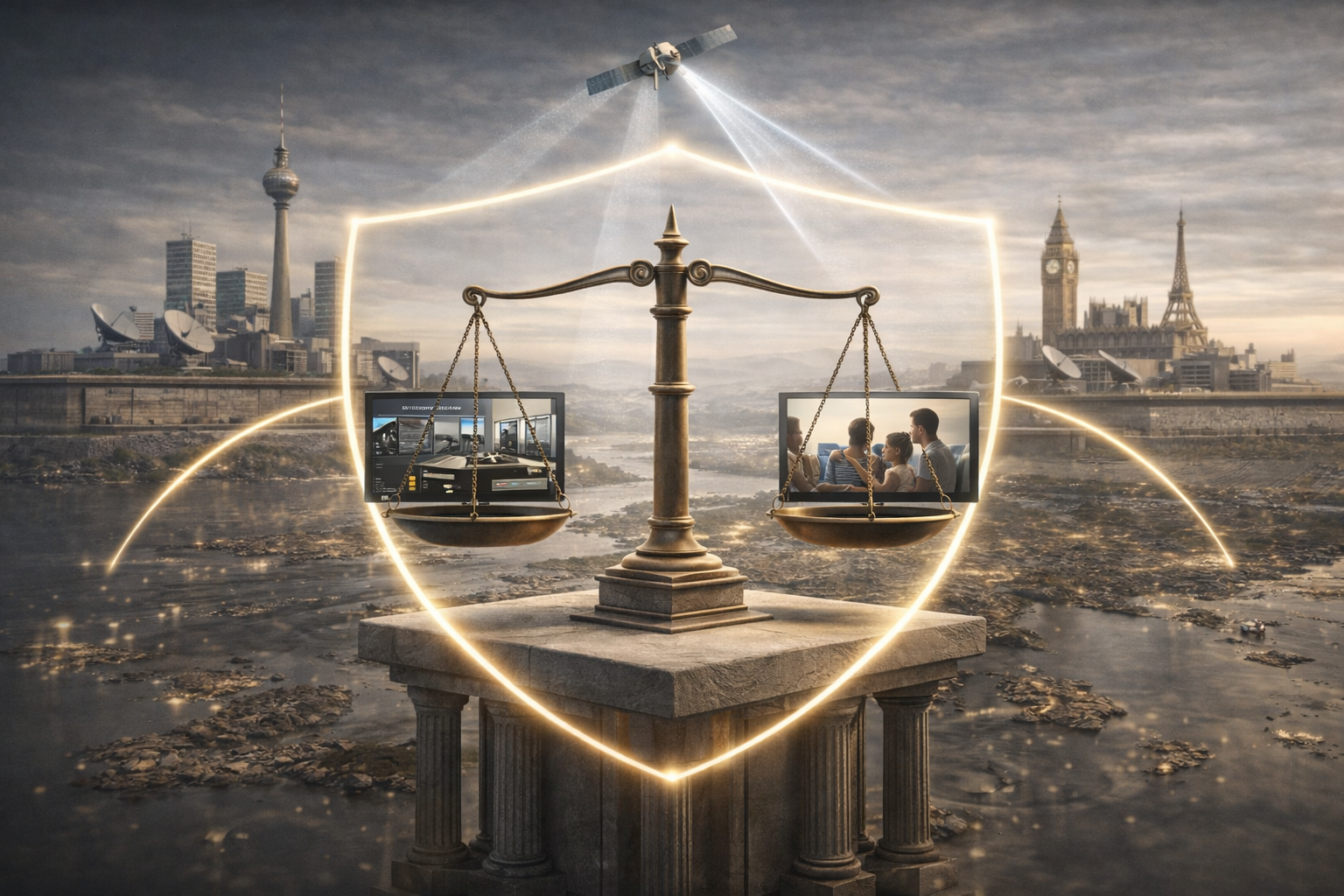
Across Europe, media laws form a carefully balanced framework. They protect viewers from harm and misinformation, while also protecting broadcasters from unfair pressure and uncertainty.
This article explains how European media laws work in practice, how they protect both sides of the media ecosystem, and why this balance remains essential in a rapidly changing media environment.
Table of Contents
- The purpose of media laws in Europe
- Historical foundations of European media law
- Why media law protects both viewers and broadcasters
- Key rights protected for viewers
- Content safety and responsibility
- Accuracy, fairness, and accountability
- Accessibility and inclusion requirements
- Protection from excessive commercial pressure
- Legal protections for broadcasters
- Editorial independence and freedom
- Legal certainty and operational stability
- Licensing and authorization frameworks
- Cross-border broadcasting protection
- Dispute resolution mechanisms
- Platform-neutral media law
- Media law in the digital transition
- Why balance is essential
- The future of European media law
- Reality Check
- Final Verdict
- FAQ
The purpose of media laws in Europe
European media laws exist to structure a powerful medium. Television and media influence culture, public discourse, and shared understanding.
The purpose of regulation is not control, but balance. It ensures that media operates responsibly without suppressing diversity or innovation.
Historical foundations of European media law
European media law evolved alongside public broadcasting. Media was treated as a public resource.
Early frameworks emphasized universal access, signal coordination, and ethical responsibility.
These principles continue to shape modern law.
Why media law protects both viewers and broadcasters
Media ecosystems only function when both sides are protected. Viewers require safety and trust. Broadcasters require clarity and freedom.
European media law recognizes this interdependence.
Key rights protected for viewers
Viewers have the right to accurate information. To clear identification of advertising. To predictable standards.
These rights create confidence in media consumption.
Content safety and responsibility
Media laws establish boundaries for harmful content. This includes protection against extreme material and inappropriate exposure.
The goal is protection, not censorship.
Accuracy, fairness, and accountability
Broadcasters are expected to maintain accuracy. Errors must be corrected. Balance must be respected.
Media law enforces accountability without dictating opinions.
Accessibility and inclusion requirements
European law emphasizes accessibility. Subtitles. Audio descriptions. Clear scheduling.
These requirements ensure equal access across society.
Protection from excessive commercial pressure
Advertising limits protect viewers. They preserve program integrity and prevent overload.
Viewers benefit from balanced commercial exposure.
Legal protections for broadcasters
Broadcasters receive legal certainty. Clear rules. Defined obligations. Predictable enforcement.
This stability enables long-term investment.
Editorial independence and freedom
Media law protects editorial independence. Broadcasters make content decisions without arbitrary interference.
This freedom supports pluralism and diversity.
Legal certainty and operational stability
Clear legal frameworks reduce risk. Broadcasters know what is expected.
This predictability supports consistent service.
Licensing and authorization frameworks
Licensing ensures accountability. It also protects broadcasters by formalizing their rights.
Licenses define scope, not creative direction.
Cross-border broadcasting protection
European media often crosses borders. Law coordinates jurisdiction to prevent legal conflicts.
This coordination protects broadcasters and viewers alike.
Dispute resolution mechanisms
Media law provides structured dispute resolution. Complaints are reviewed. Responses are required.
Most conflicts are resolved without escalation.
Platform-neutral media law
Modern media law focuses on behavior, not technology.
The same principles apply across platforms, ensuring fairness.
Media law in the digital transition
Digital media challenges traditional frameworks. European law adapts gradually.
Continuity remains a priority.
Why balance is essential
Excessive restriction harms freedom. Excessive freedom harms trust.
European media law seeks balance, not extremes.
The future of European media law
Future media law will focus on transparency, platform accountability, and cross-border coordination.
Gradual evolution will continue.
Reality Check
Media laws succeed when they protect both sides quietly. Stability and trust are their real outcomes.
Final Verdict
European media laws protect viewers and broadcasters by balancing rights, responsibilities, and freedoms. They ensure safe access for audiences while providing legal certainty and independence for broadcasters. In a complex media landscape, this balanced framework remains essential.
FAQ
Do media laws limit free expression?
No. They protect responsible expression and diversity.
How do media laws protect viewers?
Through safety standards, accuracy rules, and accessibility requirements.
Why do broadcasters need legal protection?
To operate independently with predictable rules.
Are media laws adapting to digital platforms?
Yes. Modern frameworks are increasingly platform-neutral.
Is this article safe for AdSense and GEO?
Yes. The content is educational, neutral, and fully policy-safe.