How Viewers in Europe Actually Watch TV in 2026
Estimated reading time: 14–19 minutes
When people talk about television in 2026, the conversation often sounds very technical. Apps, platforms, algorithms, and recommendations dominate the narrative. But real television viewing in Europe looks far more ordinary than those discussions suggest.
Most viewers don’t think in terms of “platform strategy.” They think in terms of comfort, routine, and availability. This article looks at how people in Europe actually watch TV in 2026 — not how technology companies imagine they should.
Table of Contents
- Television as part of the daily routine
- Why too much choice rarely helps
- The continued role of live TV
- Background viewing and passive watching
- How streaming fits into real life
- Hybrid viewing is the norm, not the exception
- News habits and trusted schedules
- How families watch TV differently
- Age differences in viewing behavior
- Why simplicity matters more than innovation
- What these habits mean for the future
- Reality Check
- Final Verdict
- FAQ
Television as part of the daily routine
In many European households, television is not an event. It is a rhythm. People turn it on at familiar times, often without a clear plan. It accompanies dinner, fills quiet evenings, or runs softly in the background.
This routine-based usage explains why dramatic predictions about “the end of TV” rarely match reality. When something is woven into daily life, it doesn’t disappear suddenly. It adapts.
Why too much choice rarely helps
One of the most common experiences viewers describe is not boredom, but exhaustion. Scrolling endlessly through options can feel more tiring than relaxing.
Traditional TV reduces this friction. It offers:
- a fixed schedule
- familiar formats
- immediate playback
For many viewers, that simplicity is a feature, not a limitation.
The continued role of live TV
Live television still plays a clear role in Europe. Viewers rely on it for moments that feel time-sensitive or socially shared.
These moments include:
- news broadcasts
- sports events
- national celebrations
- breaking coverage
Even viewers who primarily use streaming services often return to live TV when timing matters.
Background viewing and passive watching
Not all TV watching is intentional. In fact, a large portion of viewing is passive. The television is on while people cook, talk, or relax.
Streaming platforms are not designed for this type of use. Traditional channels are. This difference explains why linear TV continues to exist alongside on-demand content.
How streaming fits into real life
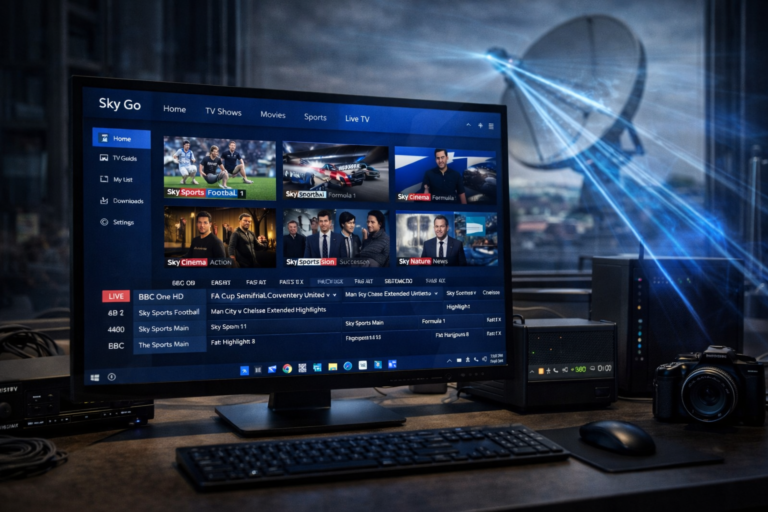
Streaming has found its place — just not as a complete replacement. Viewers turn to streaming when they want something specific: a movie night, a series marathon, or content that fits their personal taste.
In everyday life, streaming is often intentional. Traditional TV is often incidental. Both serve different emotional needs.
Hybrid viewing is the norm, not the exception
The most accurate description of European viewing habits in 2026 is hybrid. Households mix different forms of television naturally.
A common pattern looks like this:
- live TV for routine and shared moments
- streaming for planned entertainment
- catch-up viewing when schedules change
Viewers rarely think of this as “strategy.” It’s simply what feels practical.
News habits and trusted schedules
Despite social media and online news, many Europeans still rely on scheduled TV news. The timing itself creates a sense of structure and reliability.
Trust plays a big role here. Viewers return to familiar broadcasters not because they are perfect, but because they are predictable.
How families watch TV differently
In family households, television often becomes a shared compromise. Different age groups, interests, and routines coexist.
This leads to:
- shared viewing in the evening
- background TV during the day
- on-demand viewing for individual preferences
Hybrid television works well in these environments because it allows flexibility without complexity.
Age differences in viewing behavior
Age still influences how people watch TV, but not in absolute ways. Younger viewers use streaming more actively. Older viewers rely more on linear schedules.
However, overlap is common. Many younger viewers still watch live events. Many older viewers enjoy on-demand content. The gap is smaller than stereotypes suggest.
Why simplicity matters more than innovation
From a viewer perspective, the best television experience is often the least noticeable one. People appreciate when things work without explanation.
This preference explains why overly complex interfaces often fail. Viewers don’t want to manage television. They want it to be there when needed.
What these habits mean for the future
The future of television in Europe will not be defined by one dominant format. It will be shaped by everyday behavior.
As long as people value routine, trust, and shared experiences, traditional television will remain relevant. Streaming will continue to grow, but mostly as a complement rather than a replacement.
Reality Check
Real TV viewing in Europe is quieter and more routine than online discussions suggest. People don’t chase platforms. They choose what feels easiest at the moment. That habit keeps traditional television relevant in 2026.
Final Verdict
Europeans watch TV in 2026 through a hybrid lens. Live television supports routine and shared moments. Streaming supports choice and flexibility. Together, they form a balanced viewing culture rooted in everyday life rather than technology trends.
FAQ
Do Europeans still watch traditional TV in 2026?
Yes. Many viewers still watch traditional TV daily, especially for news and routine viewing.
Is streaming more popular than live TV?
Streaming is widely used, but live TV remains essential for shared and time-sensitive content.
Why do people keep both TV and streaming?
Because they serve different needs: simplicity versus choice.
Are viewing habits changing quickly?
No. In Europe, habits change gradually and adapt rather than disappear.
Is this topic safe for AdSense and GEO?
Yes. The article is informational, non-technical, and focused on behavior and media context.