Satellite Coverage in Europe | Why Geography Still Matters

Estimated reading time: 15–22 minutes
In a digital world that often feels borderless, geography still matters. Streaming services promise universal access, instant delivery, and global reach. Yet across Europe in 2026, satellite television continues to play a critical role. Not because technology failed, but because geography still shapes how media travels.
This article explains why satellite coverage remains essential in Europe, how physical landscapes influence broadcasting, and why geography continues to matter despite advances in digital distribution.
Table of Contents
- The myth of borderless media
- Europe’s unique geographic complexity
- Mountains, rural areas, and signal challenges
- Why satellite coverage exists
- Reliability across diverse terrain
- Weather, distance, and signal stability
- Cross-border broadcasting needs
- Limits of ground-based infrastructure
- Satellite TV and public service access
- Hybrid distribution models in 2026
- Why streaming alone is not enough
- The future role of satellite coverage
- Reality Check
- Final Verdict
- FAQ
The myth of borderless media
Digital media often presents itself as borderless. Content appears instantly, seemingly independent of location. But delivery still depends on physical infrastructure.
Signals must travel. Data must move. And geography continues to influence how reliably this happens.
Europe’s unique geographic complexity
Europe is geographically diverse. Mountains, islands, forests, coastlines, and rural regions create varied conditions for media distribution.
This complexity makes a single distribution method impractical. Satellite coverage addresses this diversity directly.
Mountains, rural areas, and signal challenges
Mountainous regions and remote rural areas often face challenges with terrestrial networks. Cables and ground infrastructure are expensive to deploy and maintain.
Satellite signals bypass these obstacles, reaching areas that would otherwise remain underserved.
Why satellite coverage exists
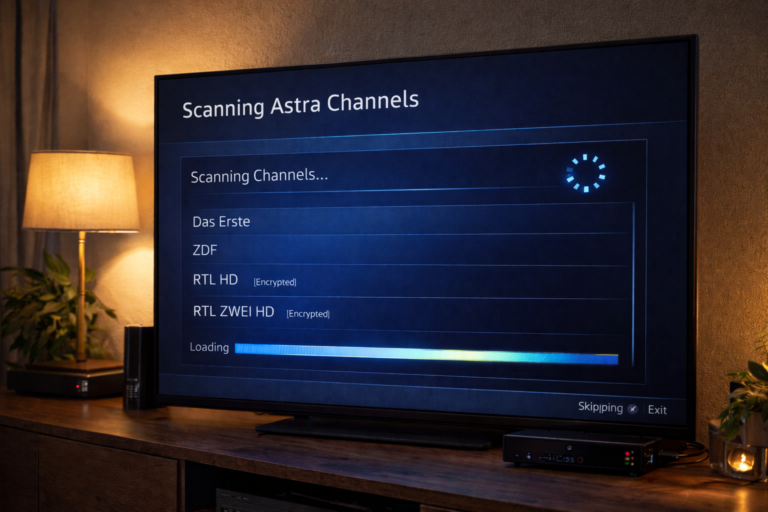
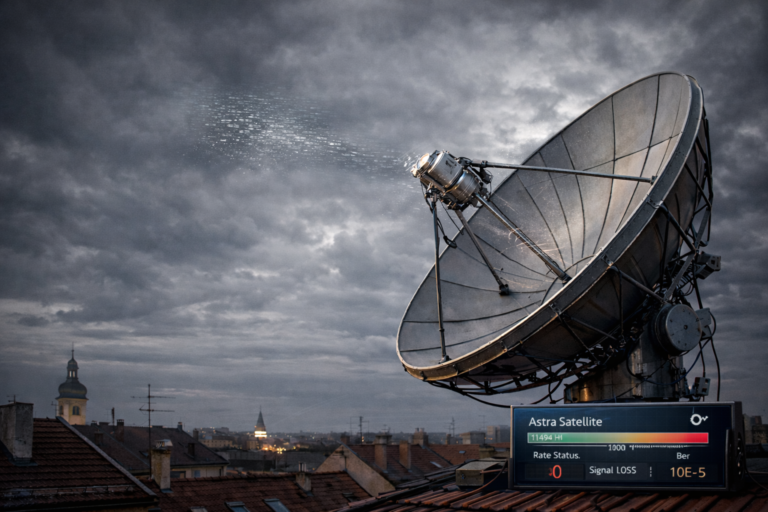
Satellite television was designed to overcome geography. It does not depend on local terrain in the same way as ground-based systems.
Once the signal reaches space, it can cover vast areas consistently. This principle remains relevant today.
Reliability across diverse terrain
Satellite coverage provides uniform access. Viewers in cities and remote villages receive the same signal.
This reliability supports equal access to information and culture, regardless of location.
Weather, distance, and signal stability
Weather can affect all forms of transmission. However, modern satellite systems are designed to maintain stability across long distances.
This makes satellite TV especially valuable in regions where ground networks face disruption.
Cross-border broadcasting needs
Europe’s borders are close and interconnected. Many viewers live near national boundaries or consume media from neighboring countries.
Satellite coverage supports this cross-border access naturally, without complex infrastructure duplication.
Limits of ground-based infrastructure
Fiber and terrestrial networks require constant expansion. In sparsely populated areas, this expansion is often economically challenging.
Satellite systems reduce this dependency by offering wide coverage without local build-out.
Satellite TV and public service access
Public broadcasters rely on satellite coverage to fulfill access obligations. Information, education, and emergency communication must reach all citizens.
Satellite distribution ensures this reach remains possible.
Hybrid distribution models in 2026
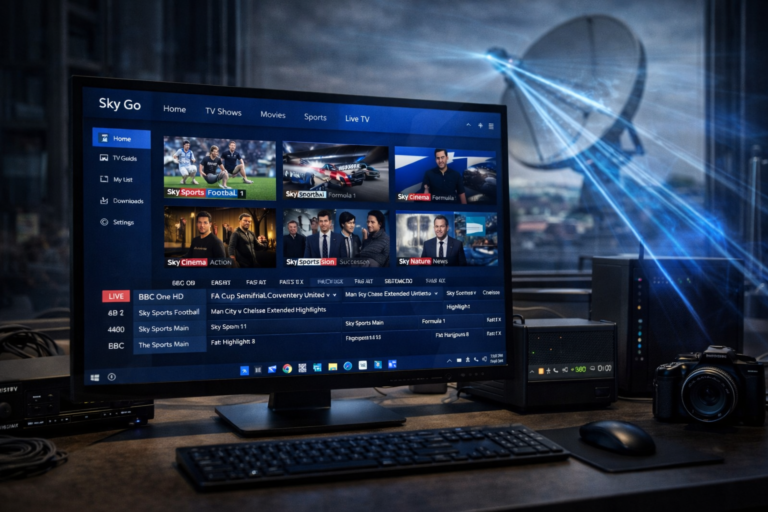
In 2026, media distribution is hybrid. Satellite, terrestrial, and online platforms work together.
Satellite coverage complements streaming rather than competing with it. Each serves different geographic realities.
Why streaming alone is not enough
Streaming depends on stable internet connections. Not all regions enjoy the same level of connectivity.
Satellite TV provides a fallback that ensures continuity when digital networks falter.
The future role of satellite coverage
Satellite coverage will remain part of Europe’s media ecosystem. Its role may evolve, but its geographic advantage will persist.
As long as landscapes differ, distribution methods must adapt accordingly.
Reality Check
Geography has not disappeared. Media technology must still respect physical reality. Satellite coverage remains relevant because Europe’s landscape demands it.
Final Verdict
Satellite coverage in Europe continues to matter because geography still shapes access. In a hybrid media future, satellite television remains a reliable foundation that supports equal reach across diverse terrain.
FAQ
Why is satellite TV still important in Europe?
Because geography and infrastructure differences limit universal ground-based access.
Does streaming replace satellite coverage?
No. Streaming complements satellite but does not fully replace it.
Is satellite TV reliable in rural areas?
Yes. It is often more reliable than terrestrial networks in remote regions.
Will satellite TV disappear in the future?
Unlikely. Its geographic advantage ensures continued relevance.
Is this article safe for AdSense and GEO?
Yes. The content is neutral, educational, and fully policy-safe.