Astra 19.2 Signal Loss Causes and Behavior
Estimated reading time: 16 minutes.
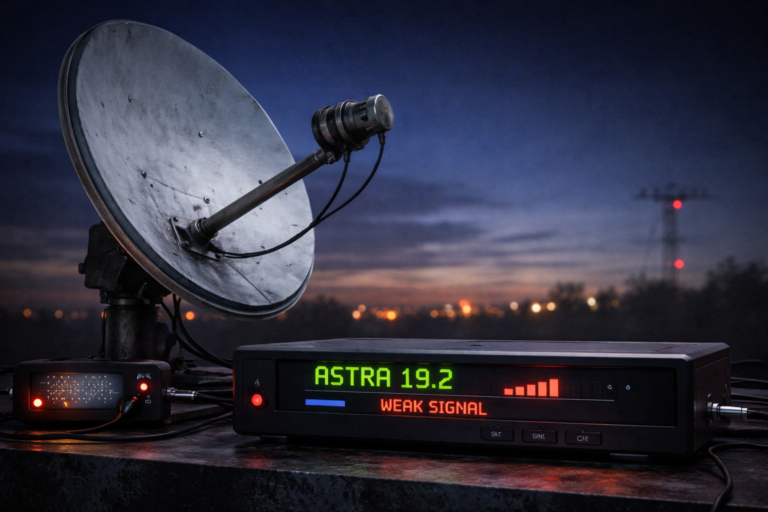
Signal loss on Astra 19.2 is one of the most critical issues in satellite reception. It can appear suddenly, affect all channels or only specific groups, and behave differently depending on conditions. Some users experience complete loss, while others see intermittent drops or gradual degradation before failure.
The key to understanding signal loss is to look at how the signal behaves during failure. Signal loss is not always an instant event. It often follows a pattern that reveals the underlying cause. By analyzing this behavior, you can identify the exact source of the problem instead of relying on guesswork.
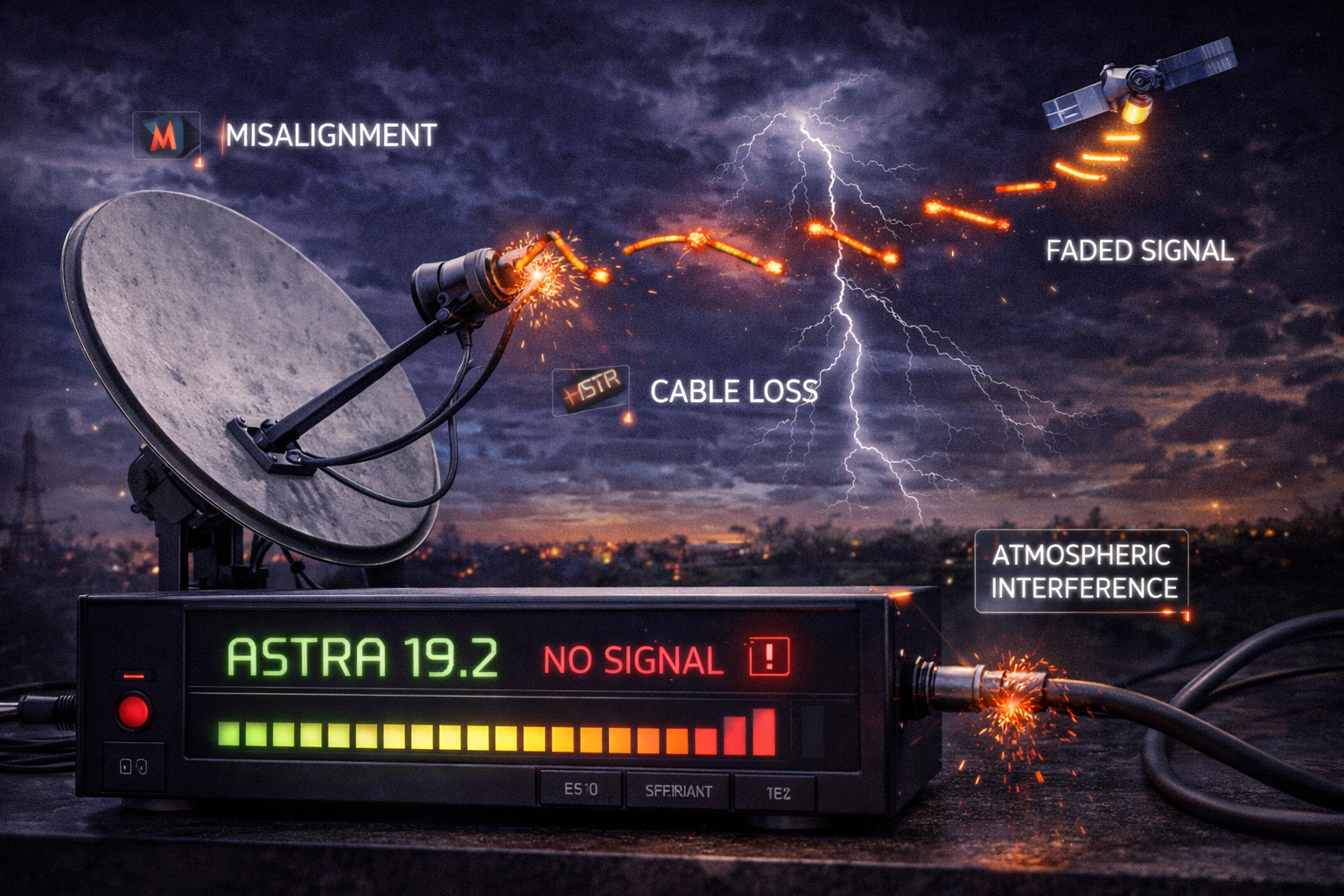
Signal loss on Astra 19.2 occurs when the receiver cannot maintain a stable lock on the signal. This can be caused by alignment issues, LNB failure, cable loss, environmental conditions, or signal quality degradation.
- What signal loss really means
- Different types of signal loss behavior
- Dish alignment related signal loss
- LNB related signal loss
- Cable and connection related loss
- Transponder specific signal loss
- Environmental and weather causes
- How signal behaves before loss
- Analytical signal loss table
- Step by step fix guide
- FAQ
What signal loss really means
Signal loss means the receiver cannot maintain a stable lock on the satellite signal. Without this lock, decoding becomes impossible.
This can happen due to complete absence of signal or because the signal quality falls below the decoding threshold.
Understanding whether the signal is absent or just unusable is important for correct diagnosis.
Different types of signal loss behavior
Signal loss does not always occur instantly. It can appear in different forms depending on the cause.
Sudden loss usually indicates hardware failure or major alignment issues. Gradual loss often points to signal degradation or environmental effects.
Intermittent loss suggests instability in the system, such as loose connections or fluctuating signal conditions.
Dish alignment related signal loss
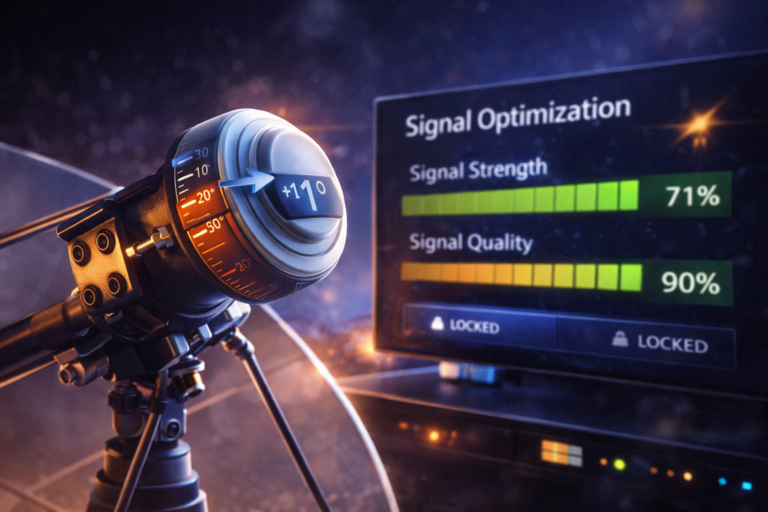
Dish alignment is one of the most common causes of signal loss. Even a small shift can reduce signal quality below the decoding threshold.
A poorly aligned dish may still receive strong signals under good conditions but fail during weak conditions.
Precise alignment ensures stable reception across all transponders.
LNB related signal loss
The LNB is responsible for converting the satellite signal. If it fails or becomes unstable, signal loss can occur.
Common LNB issues include noise increase, frequency drift, and switching failure.
These problems often affect groups of channels rather than all channels.
Cable and connection related loss
Signal loss can occur in cables and connectors. Loose connections, damaged cables, or poor shielding reduce signal quality.
These issues may cause intermittent or gradual signal loss.
Checking cable integrity is essential for stable reception.
Transponder specific signal loss
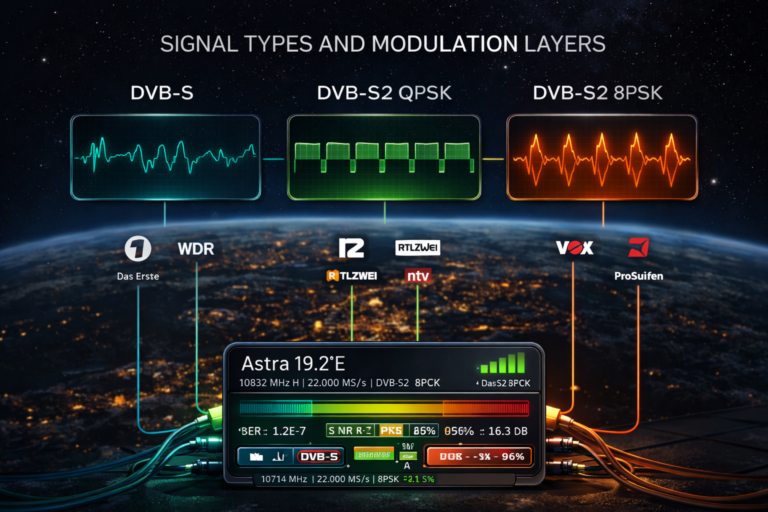
Not all transponders have the same signal margin. Some are easier to receive, while others are more sensitive.
This is why signal loss may affect only certain German channels.
Understanding transponder distribution helps identify selective signal loss.
Environmental and weather causes
Weather conditions such as rain and heavy clouds can reduce signal strength. This is known as rain fade.
Obstacles like trees or buildings can also block or weaken the signal.
Environmental factors often cause temporary signal loss.
How signal behaves before loss
Before complete signal loss, the system often shows signs of instability. Channels may freeze or pixelate.
Signal quality may drop gradually while strength remains stable.
These signs indicate that the system is approaching the decoding threshold.
Analytical signal loss table
| Symptom | Cause | Behavior | Action |
|---|---|---|---|
| Sudden signal loss | Dish misalignment or cable failure | Immediate failure | Check hardware |
| Gradual signal loss | Signal degradation | Progressive failure | Improve quality |
| Intermittent loss | Loose connection | On and off signal | Check cables |
| Loss during rain | Weather effect | Temporary loss | Improve alignment |
| Loss on specific channels | Transponder issue | Selective loss | Check frequency and LNB |
Step by step fix guide
Start by identifying the type of signal loss. Determine if it is full, partial, or intermittent.
Check signal quality and alignment. Adjust the dish if necessary.
Inspect the LNB and replace it if it shows instability.
Check cables and connectors for damage or loose connections.
Ensure there are no obstacles blocking the signal path.
Test the system under stable conditions to confirm the fix.
Signal loss is usually the result of multiple small issues rather than a single failure. Identifying the pattern of loss is the key to solving it.
Astra 19.2 signal loss is not random. It follows clear technical causes and behaviors. By understanding how the signal fails and analyzing its pattern, you can diagnose problems accurately and restore stable reception.
FAQ
| Question | Answer |
|---|---|
| What causes signal loss on Astra 19.2 | Alignment issues, LNB problems, cable faults, or environmental effects. |
| Why does signal disappear suddenly | Usually due to hardware failure or major alignment shift. |
| Can weather cause signal loss | Yes. Rain and clouds can reduce signal quality. |
| Why do only some channels lose signal | Because they are on weaker transponders. |
| How can I fix signal loss | Improve alignment, check hardware, and ensure stable signal quality. |