Astra 19.2 vs 28.2 Technical Differences Explained
Estimated reading time: 17 minutes.
From a user perspective, Astra 19.2E and Astra 28.2E look like two similar satellite positions. Both operate in the same orbital arc, both use Ku band frequencies, and both deliver digital TV using DVB S2. But once you go deeper into the technical layer, the differences become very clear.
These differences are not just about channels or coverage. They involve transponder structure, beam design, signal distribution, and system architecture. Understanding these technical details explains why reception behaves differently even when using the same equipment.
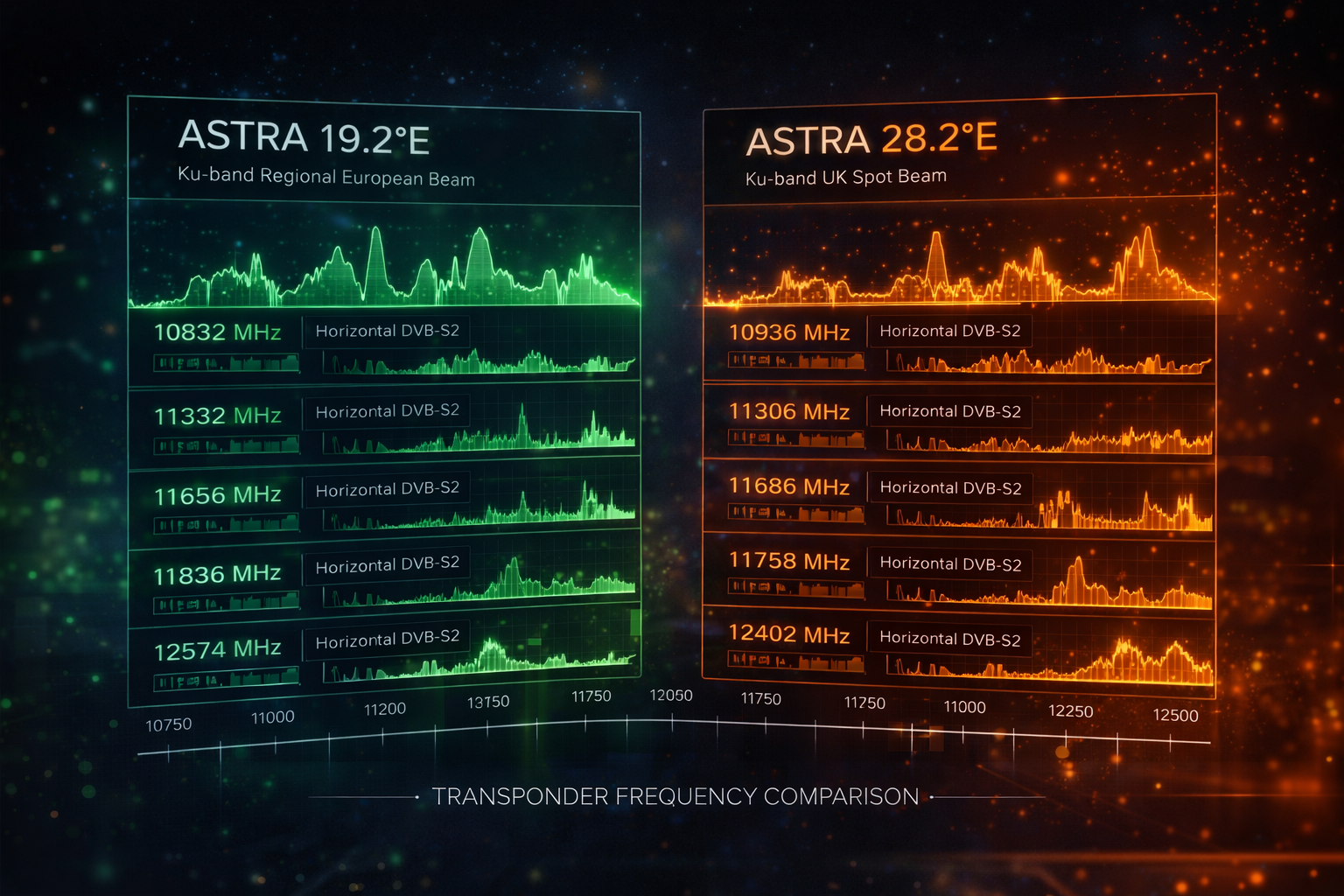
Astra 19.2E and Astra 28.2E both operate in the Ku band range 10.7 to 12.7 GHz but differ in transponder distribution, beam design, and signal targeting strategy. :contentReference[oaicite:0]{index=0}
- Frequency band and transmission range
- Transponder structure and capacity
- Beam design and signal distribution
- Satellite architecture and co-location
- Signal modulation and decoding behavior
- Signal margin and performance differences
- Multi satellite reception setup logic
- Analytical technical comparison table
- Real technical impact on reception
- FAQ
Frequency band and transmission range
Both Astra 19.2E and Astra 28.2E operate in the Ku band frequency range from approximately 10.7 GHz to 12.7 GHz. :contentReference[oaicite:1]{index=1}
This means they use the same type of LNB and receiver technology. From a hardware perspective, there is no difference in frequency compatibility.
However, how these frequencies are used and distributed across transponders is where the difference begins.
Transponder structure and capacity
Astra 19.2E operates with a large number of transponders designed for wide European distribution, supporting more than a thousand channels across multiple markets. :contentReference[oaicite:2]{index=2}
Astra 28.2E has an even larger total transponder capacity, but these are divided across different beam types including UK spot beams and regional beams. :contentReference[oaicite:3]{index=3}
This difference in transponder allocation directly affects channel grouping and signal behavior.
Beam design and signal distribution
Beam design is one of the most important technical differences.
Astra 19.2E mainly uses wide beams that distribute signal evenly across Europe. This ensures consistent reception across a large area.
Astra 28.2E uses a combination of wide beams and highly focused spot beams. These beams concentrate signal power in specific regions such as the UK.
This design increases efficiency but reduces accessibility outside the target region.
Satellite architecture and co-location
Both Astra positions use a co-location strategy. Multiple satellites are positioned very close to each other in the same orbital slot.
This allows increased capacity, redundancy, and flexible signal management. :contentReference[oaicite:4]{index=4}
However, Astra 28.2E includes more complex beam configurations across its satellite fleet compared to Astra 19.2E.
Signal modulation and decoding behavior
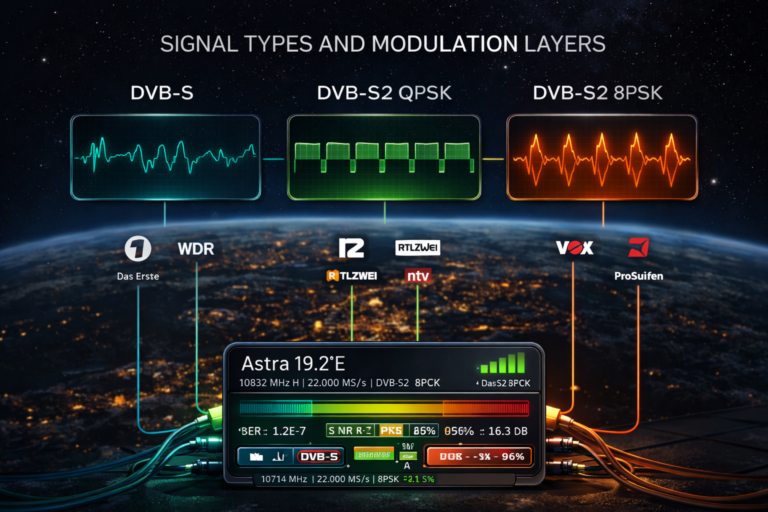
Both satellites use DVB S2 modulation standards, allowing high efficiency transmission and advanced error correction.
From a receiver perspective, decoding technology is the same. But signal stability depends on how clean and strong the signal is when it reaches the receiver.
Astra 28.2E signals may require higher precision in decoding outside its main coverage area.
Signal margin and performance differences
Signal margin refers to how far the signal quality is above the decoding threshold.
Astra 19.2E generally provides higher margin across Europe due to its wide beam distribution.
Astra 28.2E provides very high margin inside the UK but lower margin outside it, making reception more sensitive to alignment and conditions.
Multi satellite reception setup logic
Because both satellites are relatively close in orbital position, they can be received using a multi LNB setup.
Devices like monoblock LNBs allow switching between satellites automatically using DiSEqC control. :contentReference[oaicite:5]{index=5}
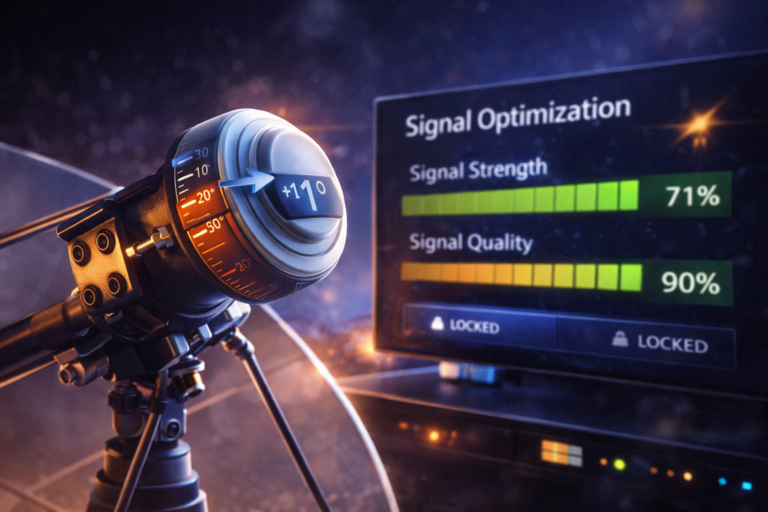
However, the technical challenge is maintaining optimal alignment for both satellites at the same time.
Analytical technical comparison table
| Technical Feature | Astra 19.2E | Astra 28.2E |
|---|---|---|
| Frequency band | Ku band 10.7 to 12.7 GHz | Ku band 10.7 to 12.7 GHz |
| Transponder distribution | Wide European allocation | Mixed wide and spot beams |
| Beam design | Wide coverage | Focused regional beams |
| Signal margin | Stable across Europe | High in UK lower outside |
| Reception sensitivity | Moderate | High outside target region |
Real technical impact on reception
In real installations, these technical differences determine how the system behaves.
Astra 19.2E is more forgiving and stable due to its wide beam design. Astra 28.2E is more efficient in its target region but requires more precise setup outside it.
This is why two satellites using the same technology can produce completely different reception results.
The technology behind both satellites is similar. The real difference comes from how the signal is engineered and distributed across regions.
Astra 19.2E and Astra 28.2E share the same technical foundation but differ in signal design and distribution strategy. These differences affect transponder behavior, signal margin, and reception difficulty. Understanding them is essential for building a reliable satellite setup.
FAQ
| Question | Answer |
|---|---|
| Do Astra 19.2E and 28.2E use the same frequencies | Yes both operate in the Ku band range. |
| Why is Astra 28.2E harder to receive | Because it uses focused beams with limited coverage. |
| Which satellite has more transponders | Astra 28.2E has higher total capacity but more complex distribution. |
| Can I use the same receiver for both | Yes both use DVB S2 technology. |
| What is the main technical difference | Beam design and signal distribution strategy. |