German TV Signal Differences Astra 19.2 Explained
Estimated reading time: 13 minutes.
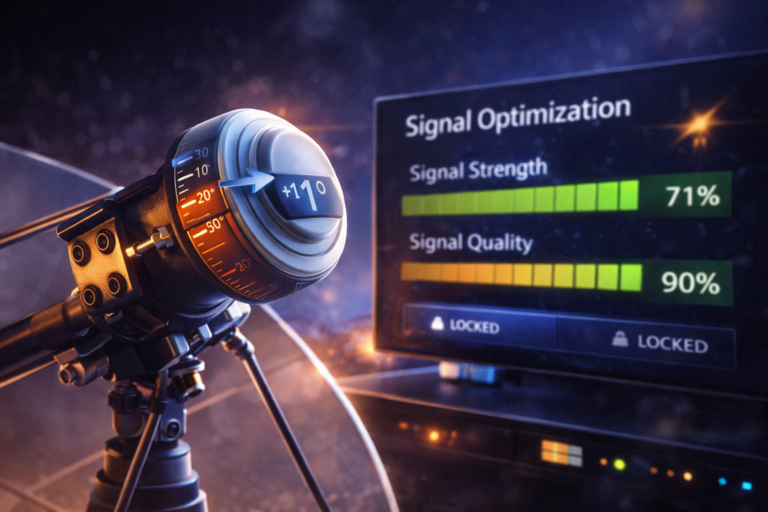
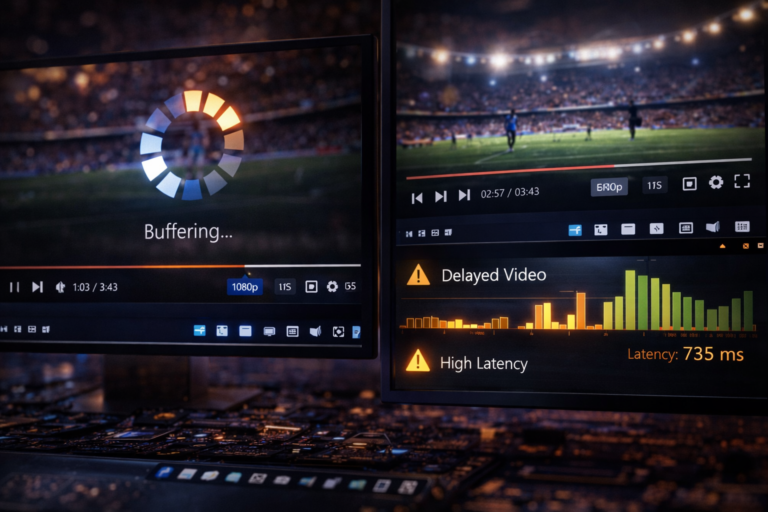
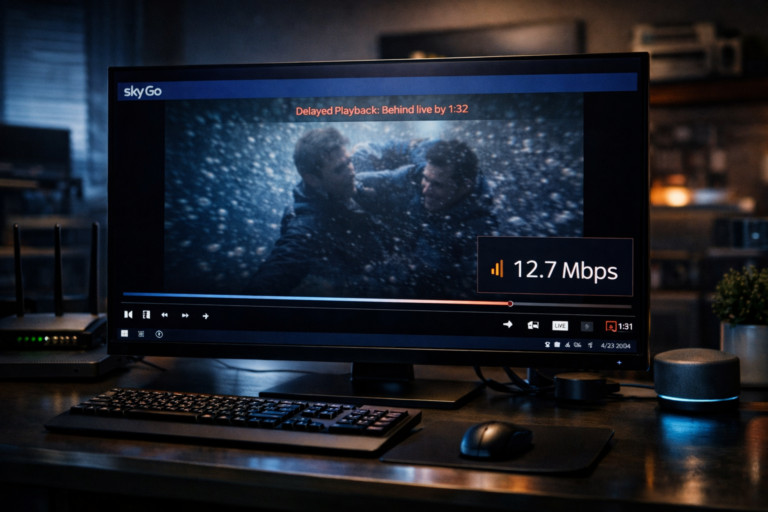
Not all German TV signals on Astra 19.2 behave the same way. Some channels remain stable under weak conditions, while others start to break or disappear much earlier. This difference is not random. It comes from how signals are transmitted, processed, and received at a technical level.
Understanding signal differences is essential if you want to diagnose problems correctly. Instead of assuming a general signal issue, you can identify exactly which part of the system is causing instability by analyzing how different channels behave.
German TV signals on Astra 19.2 vary based on transponder parameters, modulation methods, frequency bands, and reception conditions. These differences directly impact stability and decoding performance.
- Why signal differences exist on Astra 19.2
- How modulation affects signal stability
- Frequency band differences and behavior
- Polarization effects on signal reception
- Receiver signal processing differences
- Signal margin and decoding thresholds
- Environmental impact on different signals
- Analytical signal difference table
- How to improve signal stability
- FAQ
Why signal differences exist on Astra 19.2
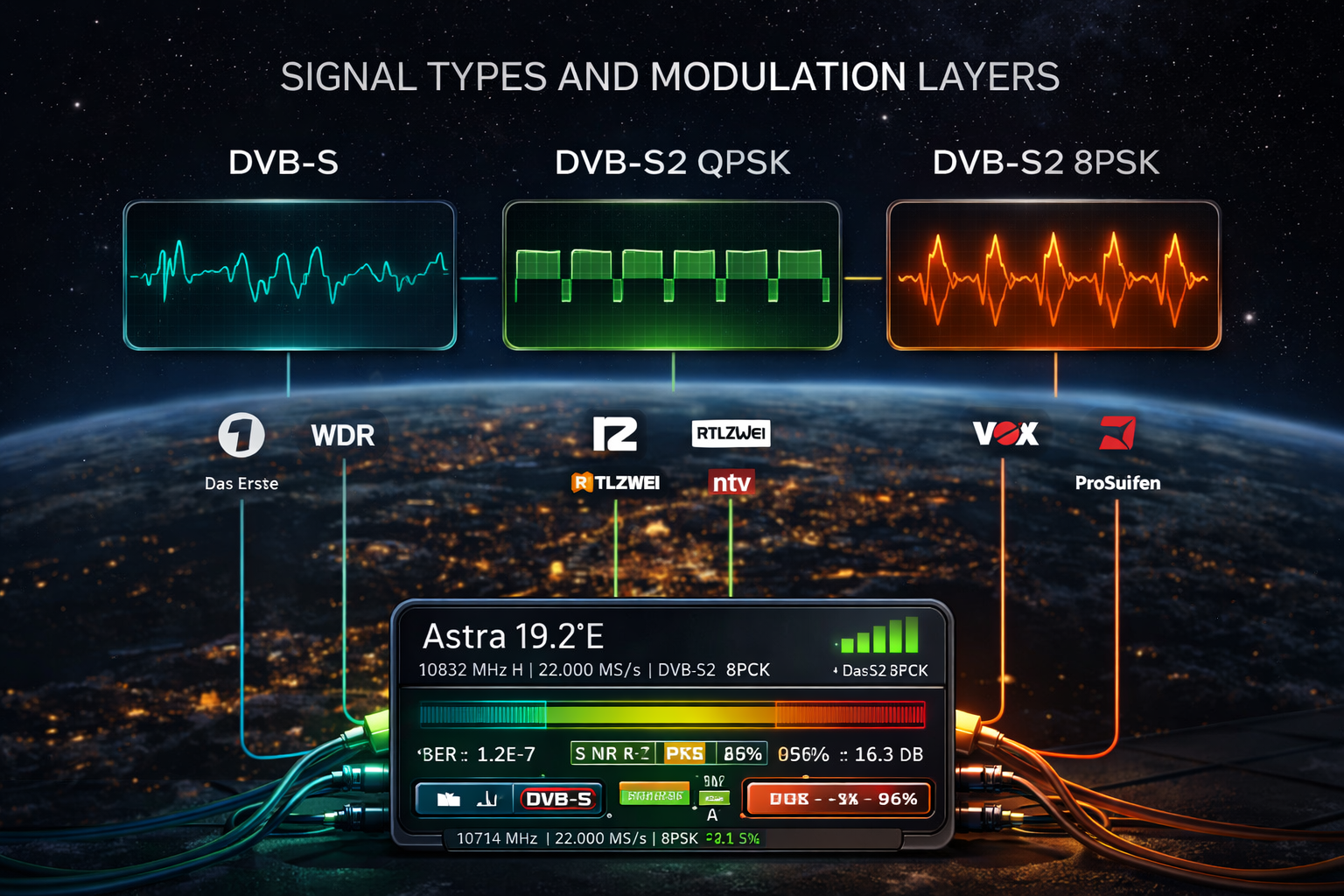
Signals differ because each transponder operates under its own parameters. These include frequency, symbol rate, modulation type, and error correction settings.
German TV channels are spread across these transponders, which means each group of channels follows the behavior of its transmission parameters. This creates natural variation in how channels perform.
From a technical perspective, signal differences are expected. They reflect how the satellite system is designed to optimize bandwidth and coverage.
How modulation affects signal stability
Modulation determines how data is encoded into the signal. More efficient modulation allows more data to be transmitted but requires better signal quality.
Channels using higher efficiency modulation are more sensitive to noise and alignment errors. They may fail earlier when signal quality drops.
This is why some German channels appear more stable than others. They may be using more robust transmission parameters.
Frequency band differences and behavior
Astra 19.2 uses different frequency bands to transmit signals. Each band has unique propagation characteristics.
Higher frequency signals are more sensitive to atmospheric conditions and installation quality. Lower frequency signals may be more stable under the same conditions.
This difference affects how channels behave during weather changes or slight alignment issues.
Polarization effects on signal reception
Polarization allows satellites to reuse frequencies by separating signals into horizontal and vertical paths.
If polarization alignment is not correct, one group of channels may suffer while others remain stable.
This creates clear patterns in signal differences, especially when only specific channel groups are affected.
Receiver signal processing differences
Receivers interpret signals differently depending on their design. Some tuners are more sensitive and can handle weaker signals better.
Signal processing also depends on firmware and decoding algorithms. This can create differences in how channels perform on different receivers.
In some cases, one receiver may display a channel perfectly while another struggles under the same conditions.
Signal margin and decoding thresholds
Signal margin refers to how much stronger the signal is compared to the minimum required for decoding.
Channels with higher margin remain stable longer. Channels with lower margin fail earlier when conditions worsen.
This explains why some German channels disappear first during rain or weak signal conditions.
Environmental impact on different signals
Weather conditions affect signals differently depending on their frequency and strength. Rain, clouds, and humidity can reduce signal quality.
Channels with weaker margins are affected first. Stronger signals remain stable longer.
Physical obstacles can also create uneven signal loss, affecting specific channels more than others.
Analytical signal difference table
| Symptom | Cause | Meaning | Action |
|---|---|---|---|
| Some channels stable others unstable | Different signal margins | Uneven signal strength | Adjust dish alignment |
| Channels fail in bad weather | Low signal margin | Weak signals affected first | Improve installation |
| Channels missing by polarization | Polarization misalignment | LNB issue | Adjust LNB skew |
| Some channels pixelate | Low signal quality | Decoding problem | Check cables and alignment |
| Receiver shows signal but no picture | Decoding threshold not met | Quality too low | Improve signal quality |
How to improve signal stability
Start by checking signal quality on different channels. Identify which ones are weaker.
Inspect your dish alignment carefully. Even small adjustments can improve weaker signals.
Check LNB condition and ensure proper positioning. Replace it if necessary.
Inspect cables and connectors for losses or damage.
Finally, ensure your receiver is updated and configured correctly.
Signal differences are normal in satellite systems. They reflect how channels are transmitted and how your installation interacts with those signals.
German TV signal differences on Astra 19.2 are caused by technical factors such as modulation, frequency, and signal margin. Understanding these differences allows you to diagnose problems accurately and maintain stable reception.
FAQ
| Question | Answer |
|---|---|
| Why do signals differ between channels | Because they use different transponder parameters and signal conditions. |
| Does modulation affect stability | Yes. More efficient modulation requires higher signal quality. |
| Can weather affect some channels more | Yes. Channels with lower signal margins are affected first. |
| Why does one receiver work better than another | Because of differences in tuner sensitivity and signal processing. |
| Should I rescan channels to fix signal issues | No. First check signal quality and installation. |