Why Netflix Streams Fail During Peak Hours
Estimated reading time: 19 to 25 minutes.
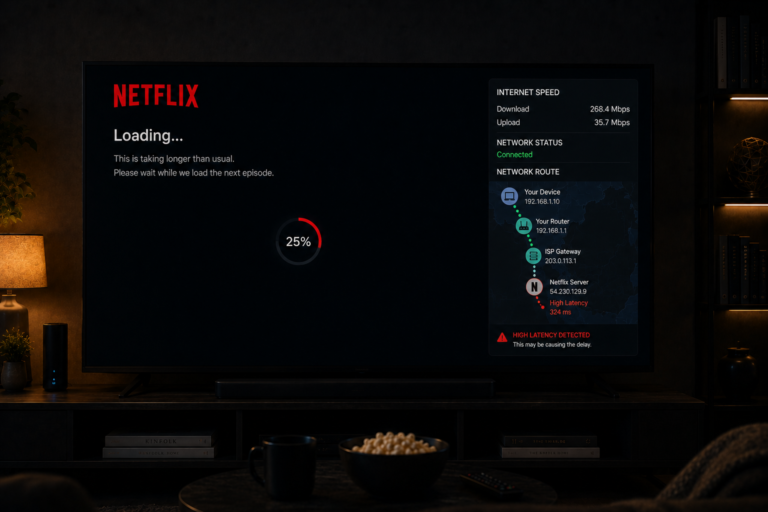
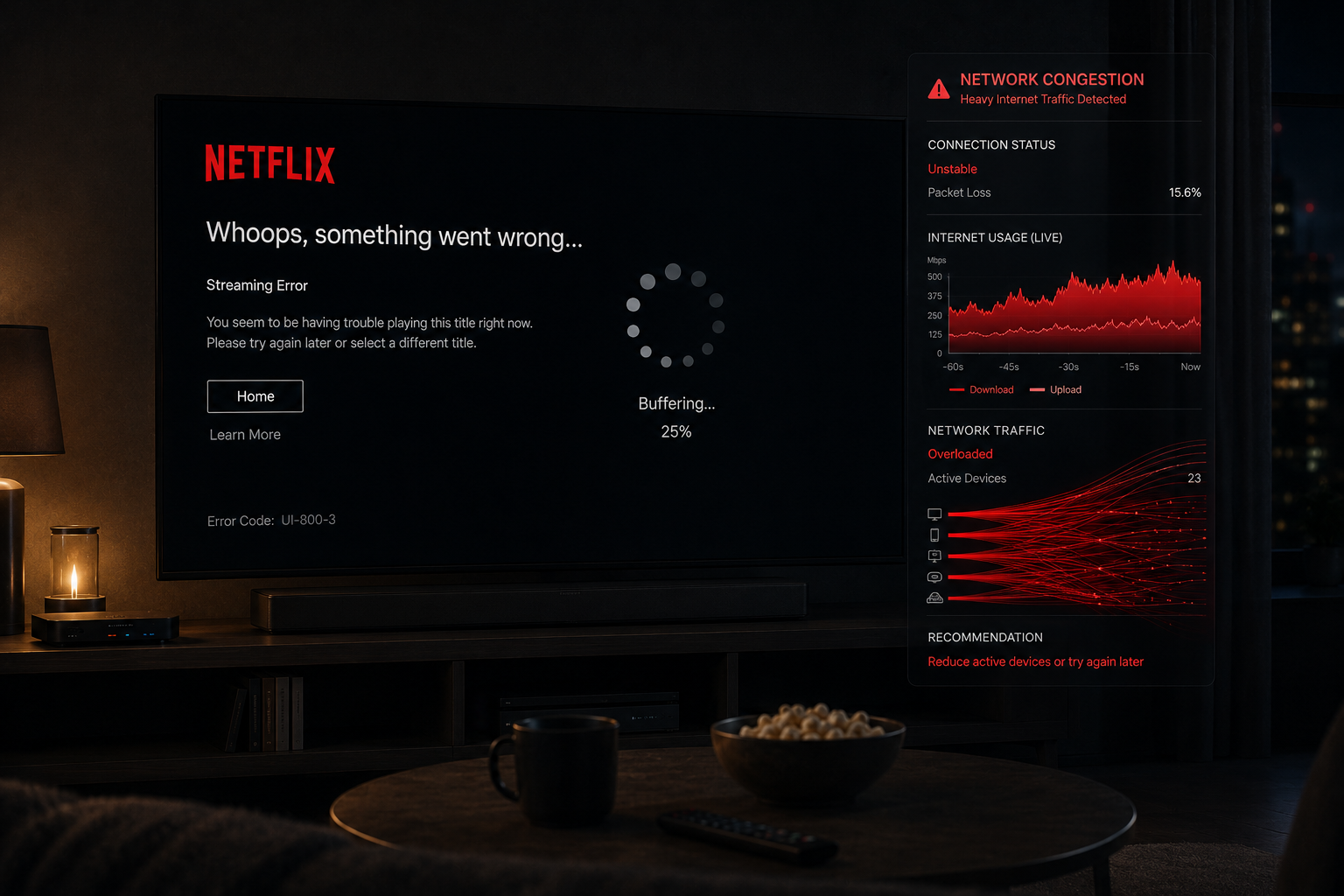
Many Netflix users notice the same frustrating pattern. During the afternoon, streaming works smoothly and quality looks excellent. But later in the evening, playback suddenly becomes unstable. Buffering appears more often, quality drops unexpectedly, streams freeze randomly, and sometimes playback fails completely.
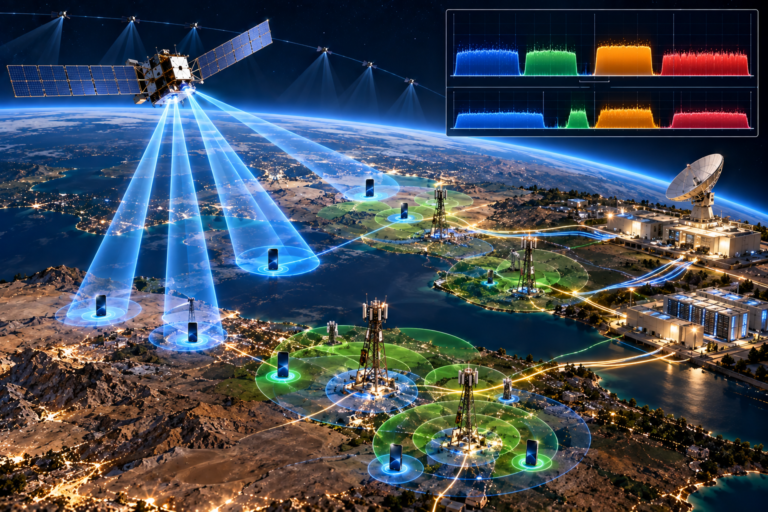
This happens because peak hours create enormous pressure across the entire internet ecosystem. Streaming systems depend heavily on stable delivery timing, predictable bandwidth, and low congestion. During busy evening periods, those conditions become far more difficult to maintain.
Quick Context. Netflix streams often fail during peak hours because millions of simultaneous users create congestion, unstable packet timing, bandwidth competition, and increased pressure on delivery infrastructure.
Table of Contents
Why internet infrastructure is shared
How congestion disrupts streaming
Bandwidth competition during evenings
Packet timing instability explained
Jitter and irregular delivery behavior
Packet loss and retransmission pressure
How Netflix reacts during heavy congestion
Bitrate collapse during busy periods
WiFi congestion inside homes and apartments
Netflix server pressure during mass streaming
ISP routing and network overload
Why action scenes fail more easily
Why 4K HDR struggles during peak hours
Why Netflix improves after midnight
What peak hours actually mean
Peak hours refer to periods when internet activity reaches extremely high levels.
This usually happens during evenings when millions of people simultaneously begin:
- Streaming movies
- Watching sports
- Playing online games
- Using social media
- Joining video calls
Traffic levels rise dramatically across:
- ISP infrastructure
- Regional exchanges
- WiFi environments
- Streaming delivery systems
Streaming services like Netflix become much harder to stabilize under these conditions.
Why internet infrastructure is shared
Most users imagine their internet connection as a private dedicated pipeline.
But internet infrastructure is heavily shared.
Your ISP distributes bandwidth across:
- Buildings
- Neighborhoods
- Cities
- Regional traffic hubs
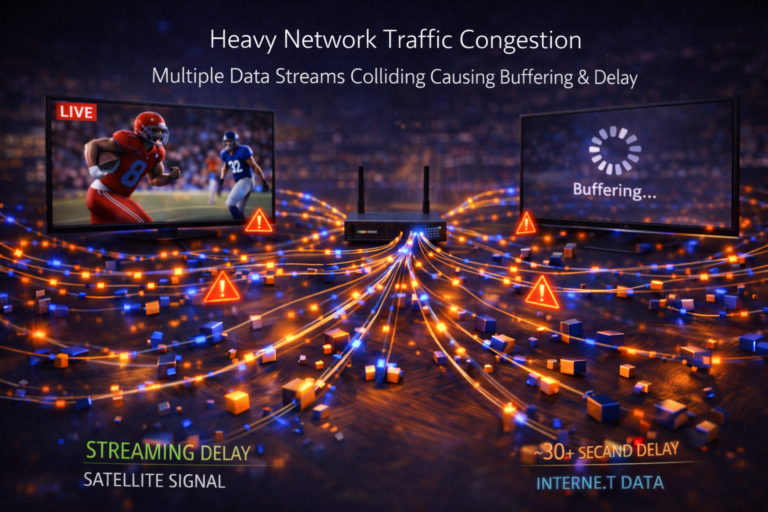
When large numbers of users become active simultaneously, congestion appears.
This affects streaming performance even on high speed internet plans.
How congestion disrupts streaming
Streaming systems depend on continuous stable data flow.
Congestion disrupts this stability.
During congestion:
- Packet timing becomes irregular
- Latency fluctuates
- Bandwidth consistency decreases
- Retransmissions increase
Netflix reacts aggressively to instability because playback continuity is its top priority.
This often results in:
- Lower image quality
- Buffering
- Playback pauses
- Complete stream failure
Bandwidth competition during evenings
Bandwidth is not infinite.
During evenings, millions of devices compete simultaneously for network capacity.
This creates:
- Network pressure
- Traffic bottlenecks
- Delivery instability
Even if a user has fast internet on paper, real world streaming conditions become less predictable.
Stable sustained delivery becomes harder to maintain.
Packet timing instability explained
Netflix depends heavily on predictable packet timing.
The player expects data packets to arrive smoothly and consistently.
Congestion disrupts this rhythm.
Packets may suddenly:
- Arrive late
- Arrive out of sequence
- Arrive inconsistently
This destabilizes:
- Buffers
- Playback timing
- Adaptive bitrate systems
Eventually playback quality collapses or the stream freezes entirely.
Jitter and irregular delivery behavior
Jitter refers to fluctuations in packet arrival timing.
Streaming systems strongly dislike jitter.
High jitter creates:
- Playback instability
- Buffer inconsistency
- Motion problems
- Sudden quality changes
Peak hours dramatically increase jitter because traffic flow becomes less predictable.
Netflix adaptive streaming systems respond by lowering bitrate aggressively.
Packet loss and retransmission pressure
Congestion also increases packet loss.
When packets disappear during transmission, retransmissions occur.
Retransmissions create delays.
Enough retransmission pressure causes:
- Buffer collapse
- Playback freezing
- Quality degradation
- Complete stream interruptions
Streaming systems become extremely unstable under heavy packet loss conditions.
How Netflix reacts during heavy congestion
Netflix constantly monitors network conditions.
When instability appears, the adaptive streaming system reacts automatically.
It may:
- Lower bitrate
- Reduce resolution
- Increase buffering behavior
- Pause playback temporarily
The goal is simple:
Preserve playback continuity whenever possible.
But severe congestion sometimes overwhelms even aggressive adaptation systems.
This is when streams fail completely.
Bitrate collapse during busy periods
Bitrate determines how much visual information Netflix delivers.
Stable high bitrate requires stable bandwidth.
During peak congestion:
- Bandwidth consistency disappears
- Delivery timing fluctuates
- Buffer pressure increases
Netflix reduces bitrate to survive under unstable conditions.
This creates:
- Blurry image quality
- Compression artifacts
- Motion softness
- Dark scene instability
If conditions worsen further, playback eventually fails.
WiFi congestion inside homes and apartments
Peak hour problems also affect local WiFi environments.
In apartment buildings:
- Dozens of routers compete simultaneously
- Wireless interference increases
- Channel overlap becomes severe
This creates:
- Packet collisions
- Higher jitter
- Retransmission spikes
Netflix playback becomes far less stable under these crowded wireless conditions.
Netflix server pressure during mass streaming
Netflix infrastructure is enormous, but global demand during peak hours is also enormous.
Millions of simultaneous streams create pressure across:
- Content delivery networks
- Regional servers
- Traffic balancing systems
Netflix handles this better than most platforms, but no streaming system completely escapes mass demand pressure.
Heavy traffic changes delivery behavior across the network.
ISP routing and network overload
ISPs constantly route traffic through large interconnected infrastructure.
Peak traffic creates:
- Routing congestion
- Latency instability
- Traffic bottlenecks
Some ISPs manage congestion more efficiently than others.
This explains why users in the same city may experience very different Netflix performance during evenings.
Why action scenes fail more easily
Action scenes require much higher bitrate.
Fast motion creates enormous data complexity.
During congestion:
- Packet timing becomes unstable
- Bitrate collapses faster
- Compression becomes aggressive
This causes:
- Motion blur
- Macroblocking
- Smearing
- Playback freezing
Heavy action content often exposes network instability more clearly than slower scenes.
Why 4K HDR struggles during peak hours
4K HDR streaming requires highly stable bandwidth delivery.
Compared to standard HD playback, 4K HDR demands:
- Higher bitrate
- More precise timing
- Lower packet loss
- Better buffering stability
Peak hour congestion directly attacks these requirements.
Netflix therefore struggles much more to maintain stable 4K HDR playback during evenings.
Why Netflix improves after midnight
After midnight, traffic pressure decreases significantly.
Fewer users compete for bandwidth.
This improves:
- Packet timing
- Latency stability
- Bitrate consistency
- WiFi conditions
Netflix adaptive streaming systems respond by restoring higher quality playback.
This is why streams often look dramatically better late at night.
A real world evening streaming example
Imagine someone watching Netflix at 9 PM on a busy evening.
The network environment becomes heavily congested.
At the same time:
- WiFi interference increases
- ISP traffic pressure rises
- Packet timing fluctuates
- Adaptive bitrate lowers quality
Initially the image becomes softer.
Then:
- Buffer health decreases
- Packets arrive inconsistently
- Retransmissions increase
Eventually:
- Playback freezes
- The stream buffers endlessly
- The app may fail entirely
The issue was not necessarily raw internet speed.
It was instability across the entire streaming chain.
| Factor | Technical Effect | Visible Result |
|---|---|---|
| Peak traffic | Heavy congestion | Playback instability |
| Bandwidth competition | Reduced consistency | Bitrate drops |
| Packet loss | Retransmission delays | Buffering |
| High jitter | Irregular packet timing | Stream freezing |
| WiFi congestion | Signal instability | Playback failures |
| Server pressure | Delivery stress | Quality fluctuations |
| 4K HDR demand | Higher bitrate needs | More visible failures |
Reality Check
Netflix streams fail during peak hours because streaming systems depend heavily on stable timing and predictable delivery. Evening congestion creates instability across networks, WiFi environments, and streaming infrastructure simultaneously.
Final Verdict
Netflix streams often fail during peak hours because millions of simultaneous users create massive pressure across the internet ecosystem. Congestion, packet timing instability, jitter, retransmissions, WiFi interference, and bitrate collapse all interact together under heavy traffic conditions. Streaming quality depends far more on stability than raw speed alone. When stability disappears during busy evenings, playback eventually degrades or fails completely.
FAQ
| Question | Answer |
|---|---|
| Why does Netflix fail during peak hours | Because heavy congestion destabilizes streaming delivery |
| Can fast internet still fail at night | Yes because stability matters more than peak speed |
| Why does Netflix buffer more in the evening | Because millions of users compete for bandwidth simultaneously |
| Does WiFi congestion affect Netflix | Yes crowded wireless environments increase instability heavily |
| Why does Netflix improve after midnight | Because network congestion and traffic pressure decrease significantly |