How Network Congestion Affects Live TV Streaming
Estimated reading time: 19 minutes.
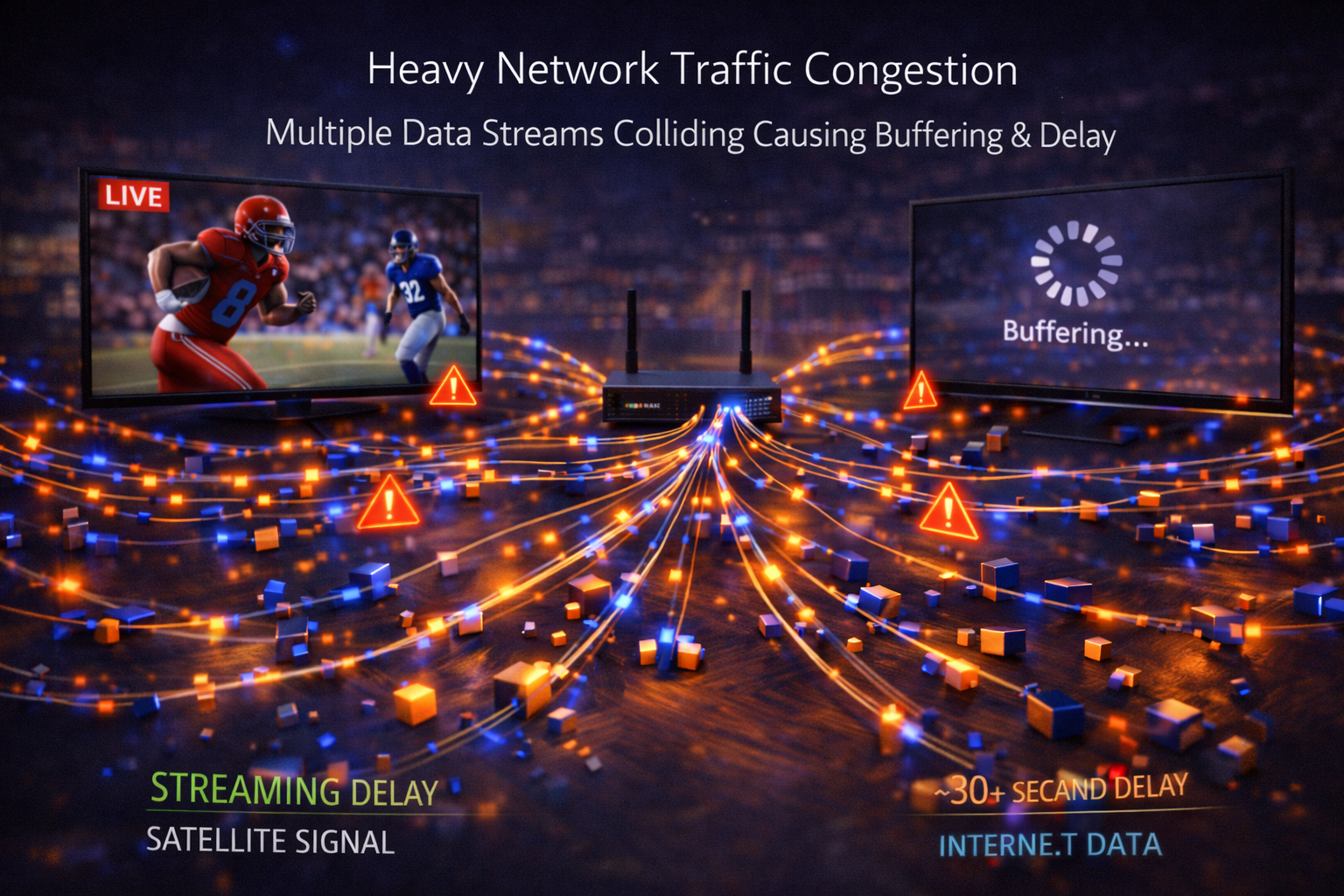
Live TV streaming depends on continuous data flow across the internet. When that flow is interrupted or slowed down, buffering begins. One of the most common causes of this problem is network congestion. It happens when too many users share the same network resources at the same time.
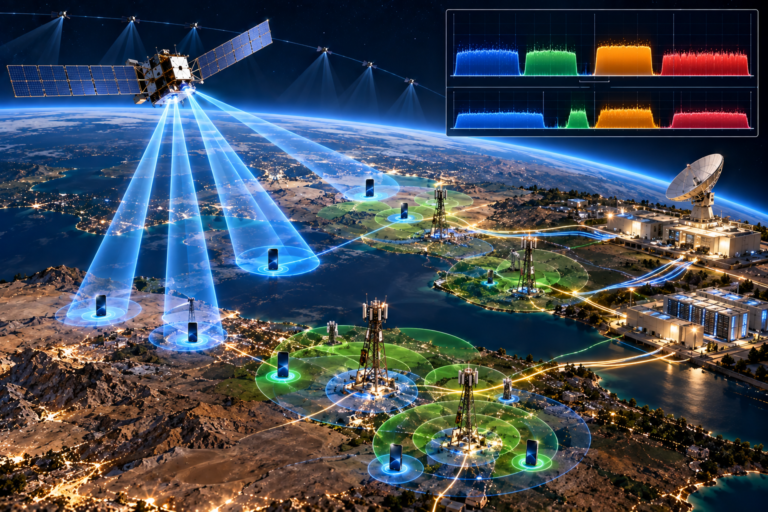
Unlike satellite broadcasting, where one signal is sent to everyone, streaming requires individual connections for each viewer. This makes streaming systems more sensitive to traffic load. Understanding how congestion affects streaming helps explain why performance drops during peak hours or major live events.
Network congestion occurs when data demand exceeds available bandwidth, leading to slower delivery, higher latency, and unstable streaming performance.
- What network congestion really means
- How data flows in streaming systems
- Latency increase during congestion
- Packet loss under heavy traffic
- Why buffering increases at peak times
- Role of ISP and traffic shaping
- How CDN tries to reduce congestion
- Technical congestion breakdown
- Real world streaming behavior
- FAQ
What network congestion really means
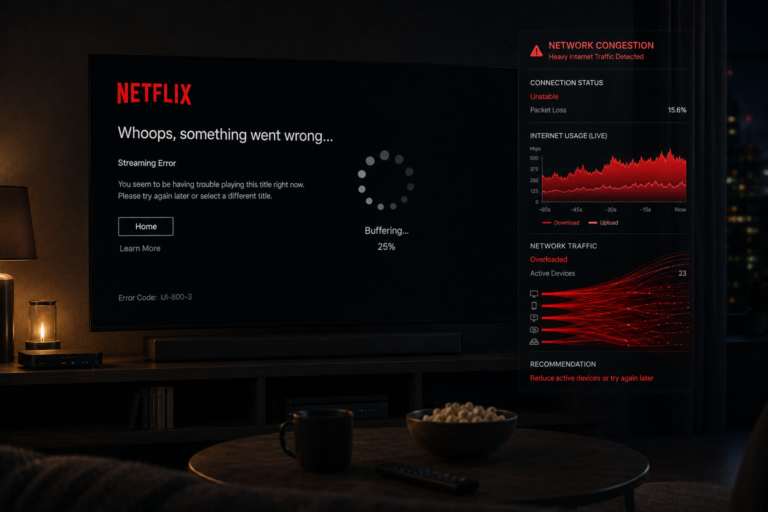
Network congestion happens when too many data requests are sent through the same network path at the same time.
Routers and switches have limited capacity. When traffic exceeds this capacity, data packets are delayed or dropped.
This creates instability in streaming performance.
How data flows in streaming systems
Streaming video is delivered in small segments from servers to the user device.
These segments must arrive continuously and in order for playback to remain smooth.
When congestion occurs, this flow becomes inconsistent, leading to interruptions.
Latency increase during congestion
Latency increases when network devices take longer to process and forward data.
During congestion, packets wait in queues before being transmitted.
This delay affects how quickly video data reaches the player.
Packet loss under heavy traffic
When network buffers are full, packets may be dropped completely.
This is called packet loss.
Streaming systems must recover lost packets, which introduces additional delay and buffering.
Why buffering increases at peak times
Peak hours create high demand on network infrastructure.
Many users streaming at the same time reduce available bandwidth per user.
This leads to slower data delivery and increased buffering.
Role of ISP and traffic shaping
Internet service providers manage network traffic using techniques like traffic shaping.
During congestion, some types of traffic may be deprioritized.
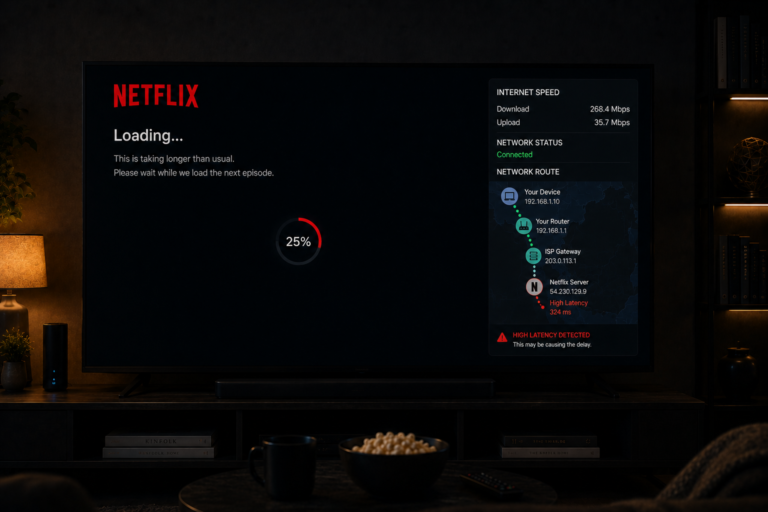
This can affect streaming performance even if your connection speed is high.
How CDN tries to reduce congestion
Content Delivery Networks distribute streaming load across multiple servers.
This reduces the pressure on any single server or network path.
However, CDN cannot fully eliminate congestion if the local network is overloaded.
Technical congestion breakdown
| Factor | Effect | Result |
|---|---|---|
| High traffic | Network overload | Slow data delivery |
| Latency increase | Delayed packets | Playback lag |
| Packet loss | Missing data | Buffering |
| ISP control | Traffic prioritization | Variable performance |
| Server load | Response delay | Stream instability |
Real world streaming behavior
Users often experience smooth streaming during off-peak hours and buffering during busy times.
This is a direct result of network congestion rather than device or application issues.
Streaming performance depends on the entire delivery chain, not just local internet speed.
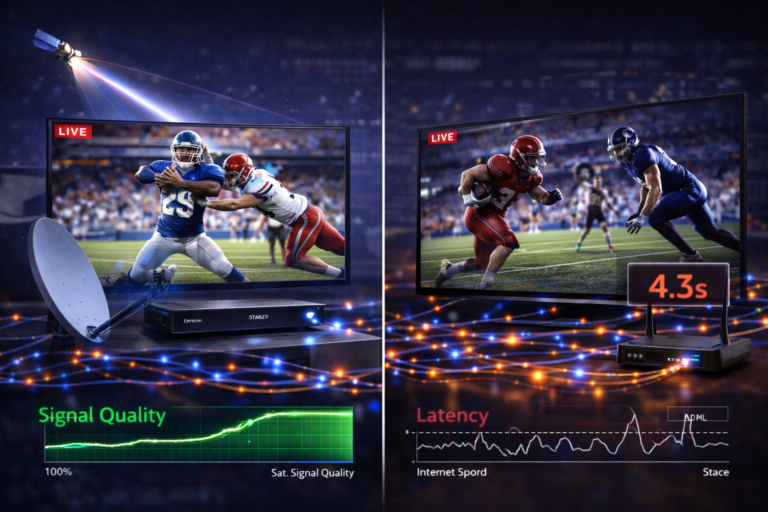
To understand how streaming platforms compete with traditional systems under these conditions, you can explore this technical analysis: How DirecTV sports package competes with streaming services
Network congestion is one of the main causes of streaming instability. Even fast connections can experience buffering when the network is overloaded.
Network congestion affects live TV streaming by increasing latency, causing packet loss, and reducing data flow stability. While technologies like CDN help reduce the impact, they cannot fully eliminate congestion. Understanding this behavior is key to explaining why streaming performance changes over time.
FAQ
| Question | Answer |
|---|---|
| What is network congestion | It is when network demand exceeds capacity |
| Why does congestion cause buffering | Because data arrives slower than playback speed |
| Does high speed internet prevent congestion | No congestion can still occur on shared networks |
| Can CDN fix congestion | It reduces impact but cannot fully eliminate it |
| When does congestion happen most | During peak usage hours and major live events |