What Most People Ignore About Eutelsat 16E Reception
Estimated reading time: 19 minutes.
- Why signal strength is often misleading.
- The hidden importance of signal margin.
- BER and decoding reliability.
- LNB stability and frequency accuracy.
- Receiver synchronization behavior.
- Environmental influences.
- Why some channels fail before others.
- How professionals evaluate reception quality.
- Why Signal Strength Is Overrated
- Signal Margin Is The Real Safety Reserve
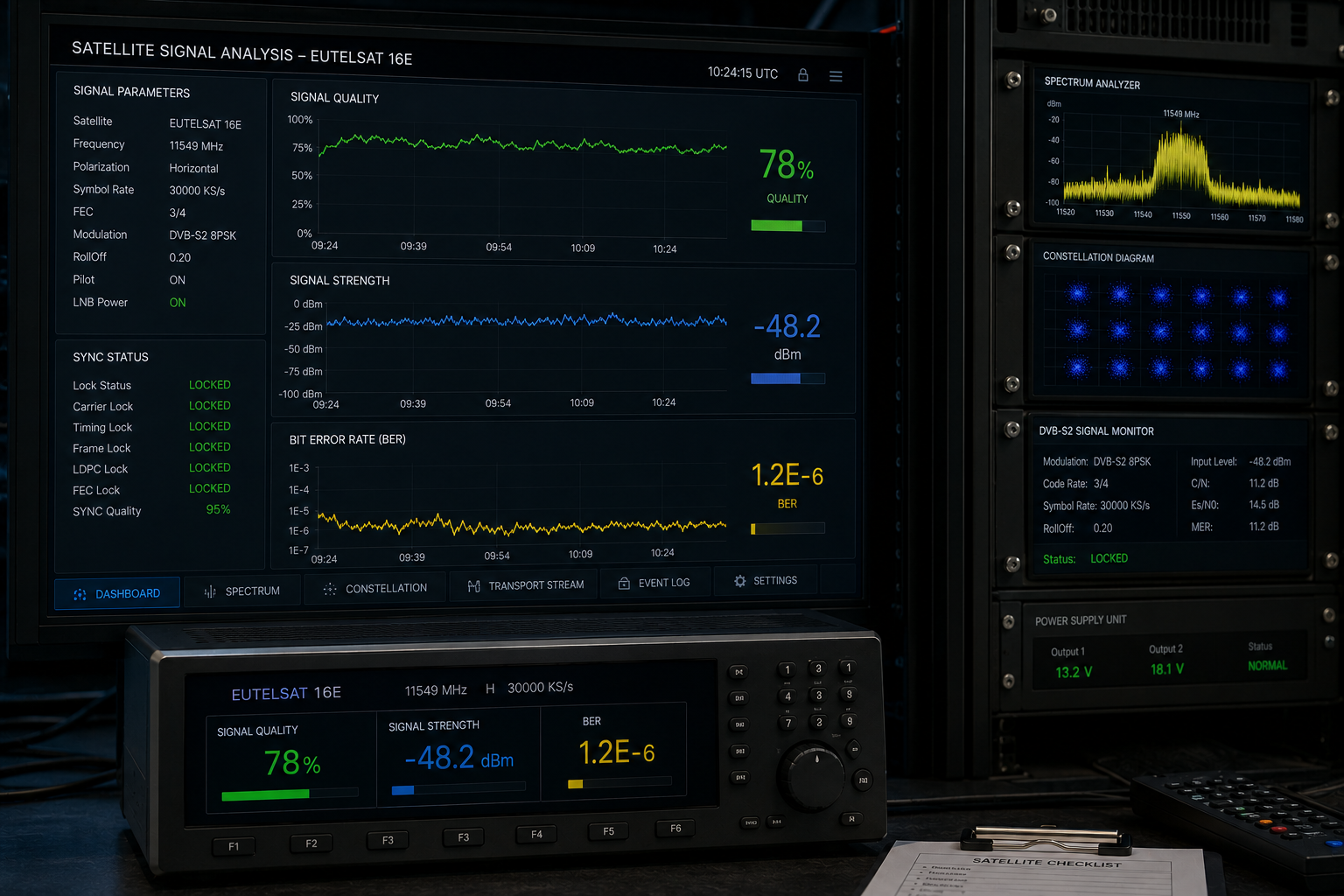
- Most Users Never Monitor BER
- The Hidden Importance Of LNB Stability
- Receiver Synchronization Matters More Than Expected
- Why Quality Always Beats Strength
- Environmental Effects Never Stop
- Not All Transponders Behave The Same
- Technical Comparison Table
- How Professionals Evaluate Reception
- Reality Check
- Final Verdict
- FAQ
Why Signal Strength Is Overrated
Signal strength is usually the first number viewers notice.
Unfortunately, it is also one of the most misunderstood measurements.
Strength simply indicates how much RF energy reaches the tuner.
It does not guarantee that the digital stream is easy to decode.
A receiver may show high strength while channels continue freezing.
Many difficult Eutelsat 16E troubleshooting cases begin because users trust the strength reading too much.
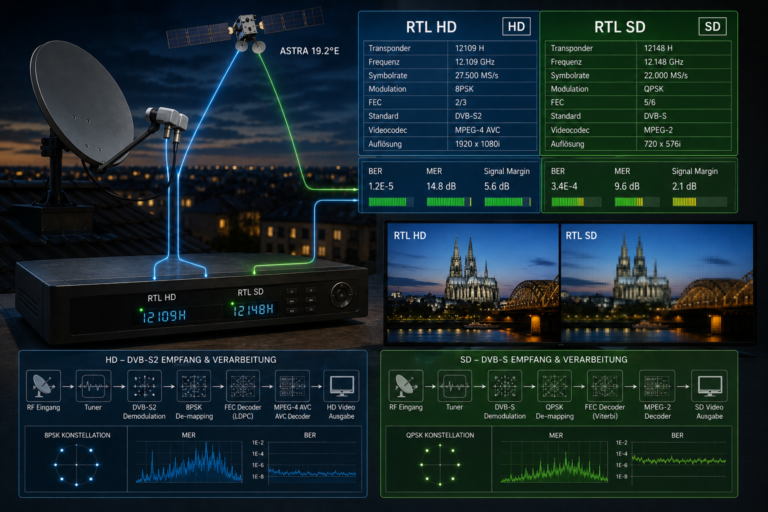
Professionals often care more about signal quality, MER, and BER than signal strength itself.
Signal Margin Is The Real Safety Reserve
Signal margin is probably the most ignored concept in satellite reception.
It represents the reserve between current reception conditions and the minimum decoding threshold.
A system with strong signal margin remains stable during weather changes and hardware fluctuations.
A system with weak margin may work perfectly today and fail tomorrow.
The difference is not visible to most users because receivers rarely display margin directly.
Yet it is often the single most important factor behind long-term stability.
Most Users Never Monitor BER
BER stands for Bit Error Rate.
It measures how many digital errors exist within the received signal.
Modern receivers automatically correct many errors before viewers notice them.
However, as BER rises, correction systems eventually reach their limits.
Channels begin freezing.
Audio interruptions appear.
Synchronization becomes unstable.
Professional installers often monitor BER because it reveals reception quality far more accurately than strength readings. Lower BER usually means a more reliable signal.
The Hidden Importance Of LNB Stability
The LNB receives extremely weak satellite signals and converts them into frequencies that the receiver can process.
Most users only replace an LNB when it stops working completely.
In reality, performance can decline gradually.
Oscillator stability may worsen.
Frequency drift may increase.
Noise levels may rise.
These changes often affect difficult DVB-S2 transponders long before total failure occurs.
The LNB continues functioning, but reception quality slowly deteriorates.
Receiver Synchronization Matters More Than Expected
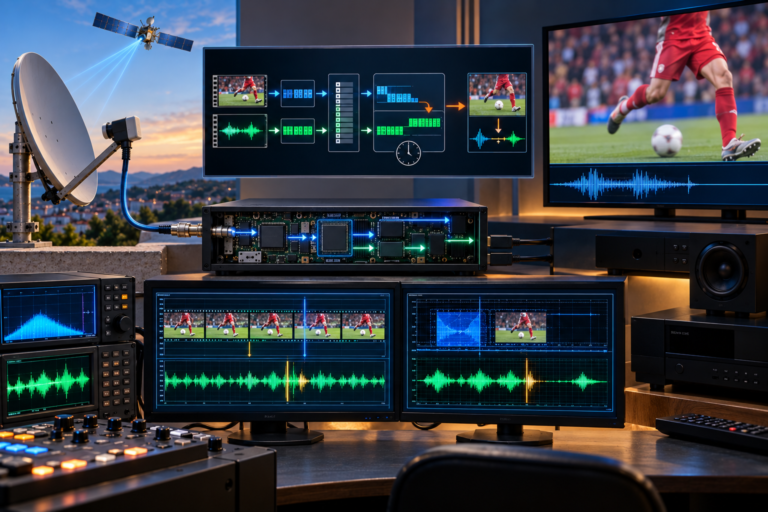
Satellite receivers continuously synchronize with incoming digital streams.
When signal quality is high, synchronization is effortless.
When BER rises, synchronization becomes more difficult.
The receiver may repeatedly gain and lose lock.
Viewers often interpret this as signal loss.
In reality, the signal may still exist while the receiver struggles to decode it efficiently.
This distinction is frequently overlooked during troubleshooting.
Why Quality Always Beats Strength
Digital television is fundamentally different from analog television.
A stronger signal is not always a better signal.
A slightly weaker signal with lower BER often performs better than a stronger signal with more errors.
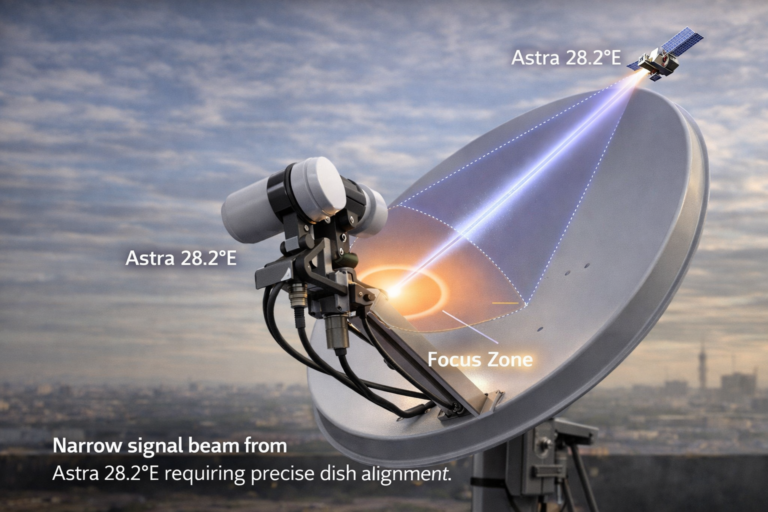
This principle explains why professional installers focus on maximizing quality during alignment.
Small quality improvements often create large gains in reception stability.
Strength alone rarely provides the full picture.
Environmental Effects Never Stop
Many users only think about weather during storms.
The environment affects satellite reception continuously.
Humidity changes.
Temperature varies.
Atmospheric density shifts.
These factors influence signal propagation every day.
Strong installations absorb the changes.
Weak installations reveal them through unstable reception patterns.
Not All Transponders Behave The Same
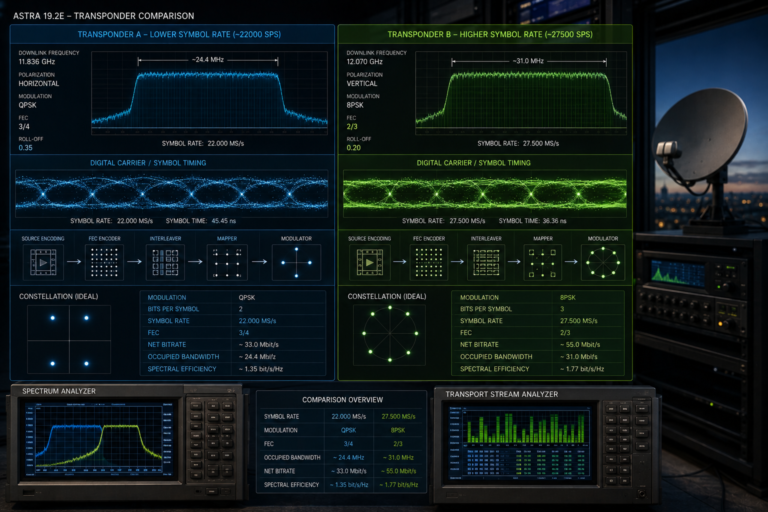
One reason Eutelsat 16E troubleshooting becomes confusing is that different transponders have different requirements.
Some are easy to decode.
Others demand cleaner synchronization and better signal quality.
This explains why a system may receive dozens of channels perfectly while a few frequencies remain problematic.
The issue is often not satellite coverage.
It is the difference in decoding requirements.
Technical Comparison Table
| Factor | Common User Focus | Professional Focus |
|---|---|---|
| Signal strength | Very high | Secondary importance |
| Signal quality | Often ignored | Critical measurement |
| BER | Rarely checked | Constantly monitored |
| Signal margin | Usually unknown | Primary objective |
| LNB stability | Only after failure | Important factor |
| Synchronization performance | Overlooked | Closely evaluated |
How Professionals Evaluate Reception
Professionals begin with signal quality rather than signal strength.
They monitor BER whenever possible.
They optimize alignment using difficult transponders rather than easy ones.
They evaluate signal margin instead of relying on basic receiver indicators.
They understand that a stable installation is created through reserve capacity rather than minimum functionality.
This approach explains why professional installations often remain reliable under conditions that cause consumer systems to struggle.
For additional insight into installations that appear correct but still fail, read Why Your Dish Looks Correct But Eutelsat 16E Still Fails.
Most Eutelsat 16E reception problems are not caused by the factors people focus on. Signal strength alone rarely explains instability. Signal margin, BER, quality, synchronization, and LNB performance are usually far more important indicators of long-term reception reliability.
What most people ignore about Eutelsat 16E reception is that stable satellite viewing depends on much more than finding the satellite and seeing a strong signal reading. The hidden factors that determine success are signal margin, BER, LNB stability, receiver synchronization, and overall signal quality. Understanding these elements transforms troubleshooting from guesswork into technical analysis and leads to far more reliable reception.
FAQ
| Question | Answer |
|---|---|
| Is signal strength the most important measurement? | No. Signal quality and BER are usually more important. |
| What is signal margin? | It is the reserve above the minimum decoding threshold. |
| Why is BER important? | It indicates how many digital errors exist within the signal. |
| Can an LNB affect quality without completely failing? | Yes. Stability and noise performance can decline gradually. |
| Why do some channels fail while others work? | Different transponders have different decoding requirements. |
| How do professionals evaluate reception? | They prioritize quality, BER, synchronization, and signal margin. |