How Sky Italia Replaced Satellite With Streaming Technology
Estimated reading time: 10 to 12 minutes.
For decades, Sky Italia was built around satellite broadcasting. The system was simple in concept. A signal was transmitted from space, received by a dish, converted by an LNB, and processed by a receiver. As long as the signal path was stable, the viewing experience was consistent.
Today, that model has changed. More users now watch Sky Italia through internet streaming instead of satellite. This shift did not just replace one delivery method with another. It transformed how content is distributed, how systems behave, and how users experience television. Understanding this transition reveals why modern viewing works the way it does.
Quick Context. Sky Italia replaced satellite based delivery with internet streaming by moving from continuous RF signals to segmented data delivery, adaptive bitrate systems, and device based playback over IP networks.
Table of Contents
How satellite broadcasting originally worked
Limitations of the satellite model
Why the shift to streaming happened
How streaming replaces satellite delivery
Core technical differences between the two systems
The role of internet networks in the new system
How devices became part of the delivery chain
How satellite broadcasting originally worked
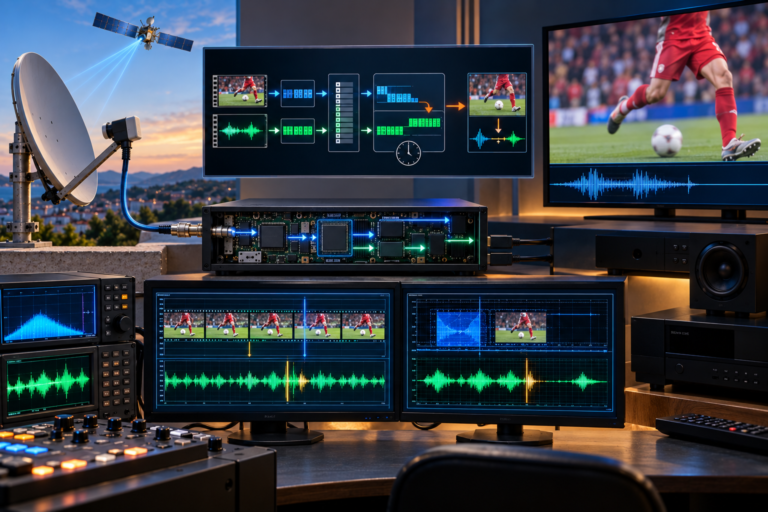
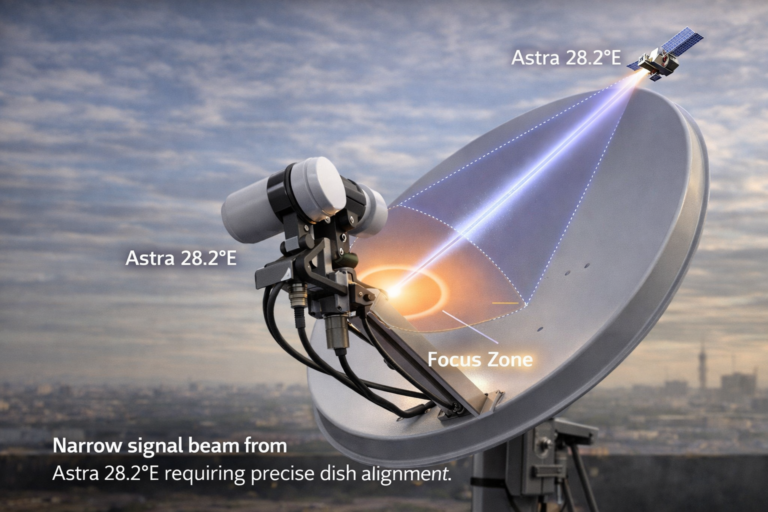
Satellite broadcasting follows a one way transmission model. A central source sends a continuous signal to a satellite. That satellite retransmits the signal over a wide geographic area. Each home dish receives the same signal at the same time.
The dish focuses the signal onto the LNB, which converts it to a lower frequency. The receiver then decodes the signal into video and audio. Once the signal is locked and stable, playback remains consistent.
This system is efficient for broadcasting the same content to many users. It does not depend on individual user connections. Every viewer receives the same stream.
Limitations of the satellite model
While satellite broadcasting is stable, it has limitations. It requires physical installation, including dish alignment and proper positioning. Signal quality depends on environmental conditions such as weather and physical obstructions.
Satellite systems also lack flexibility. Content is broadcast in fixed formats and schedules. Interactivity is limited compared to modern digital platforms.
Scaling new features or personalized content is difficult in a one way broadcast model. This becomes a challenge as user expectations evolve.
Why the shift to streaming happened
The shift to streaming was driven by the need for flexibility and scalability. Internet based delivery allows content to be accessed on multiple devices, at different times, and in different formats.
Streaming also enables dynamic control. Quality can adjust based on network conditions. Content can be personalized. Features such as pause, rewind, and on demand viewing become standard.
From a technical perspective, streaming allows the system to scale using distributed infrastructure rather than fixed broadcast capacity.
How streaming replaces satellite delivery
In streaming systems, content is no longer transmitted as a continuous signal. Instead, it is encoded into multiple quality levels and divided into small data segments.
These segments are stored across server networks. When a user selects a channel, the device requests segments from the servers. The segments are delivered over the internet and stored in a buffer.
The device then decodes and plays the video in real time. This process continues as long as the user watches.
This replaces the one way broadcast model with a two way communication system between the device and servers.
Core technical differences between the two systems
The most important difference is how data is delivered. Satellite uses continuous RF signals. Streaming uses segmented data over IP networks.
Another difference is control. Satellite relies on hardware setup. Streaming relies on network conditions and device performance.
Latency also changes. Satellite signals reach all users simultaneously. Streaming introduces delay due to buffering and data processing.
These differences explain why troubleshooting methods are different between the two systems.
The role of internet networks in the new system
In streaming, the network becomes the primary delivery path. Data must travel from servers to the user device through multiple network layers.
Performance depends on stability, latency, and consistency. Unlike satellite, where signal strength is the key factor, streaming depends on how well data flows over time.
Network congestion, routing changes, and local conditions all affect performance. This introduces variability that does not exist in traditional broadcasting.
How devices became part of the delivery chain
In satellite systems, the receiver mainly decodes a stable signal. In streaming systems, the device plays a much larger role.
The device manages data requests, buffer storage, decoding, and playback control. It must handle these tasks in real time.
This means device capability directly affects performance. Different devices may produce different results even on the same network.
The device is no longer just a receiver. It is an active component in the delivery system.
How performance behavior changed
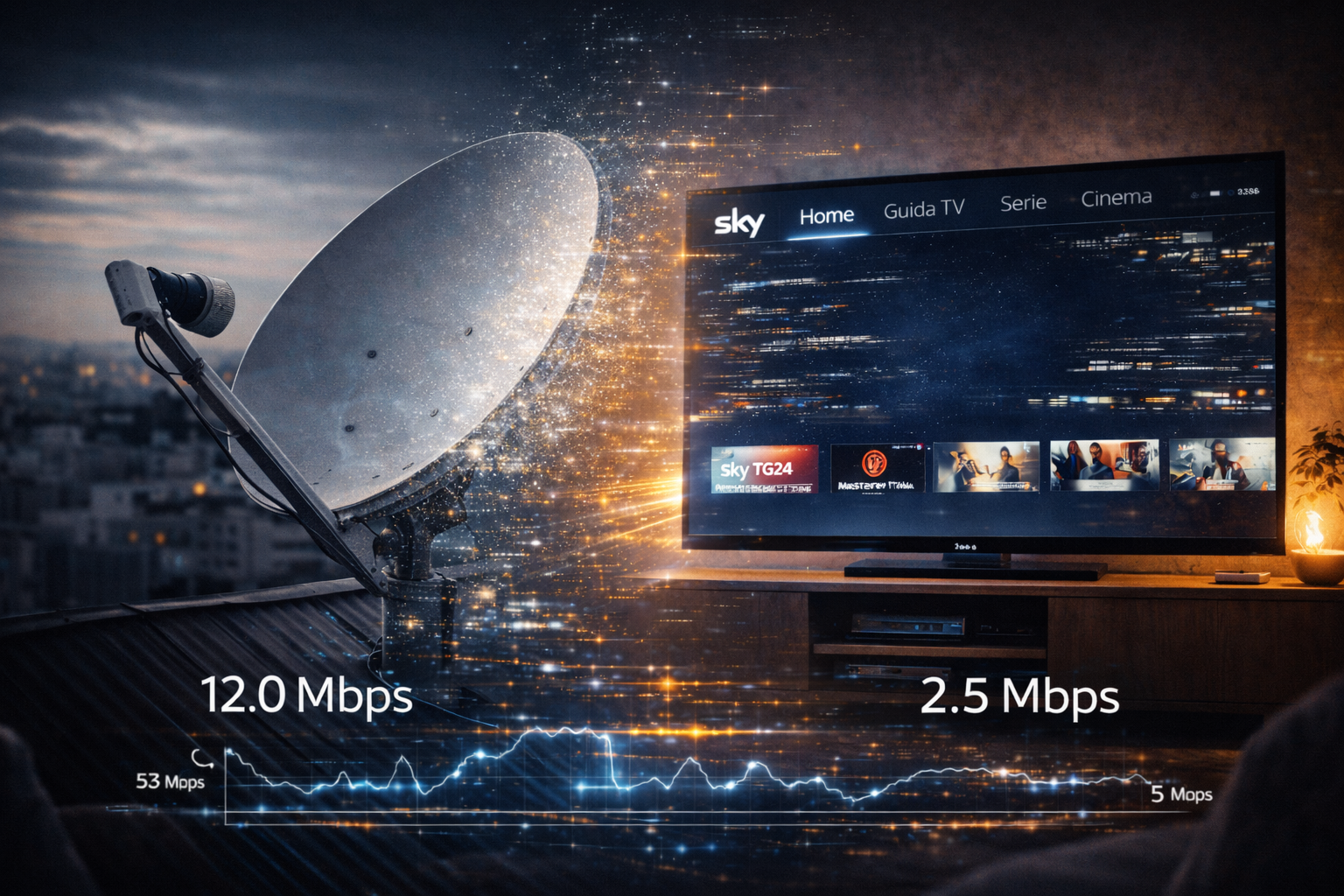
Performance behavior changed significantly with the move to streaming. Satellite systems either work or fail based on signal conditions. Streaming systems can degrade gradually.
Quality may drop instead of disappearing. Playback may buffer instead of stopping completely. These behaviors reflect how streaming adapts to changing conditions.
This adaptability improves flexibility but introduces complexity. Users must understand new types of issues related to network and device behavior.
| Aspect | Satellite System | Streaming System | Impact |
|---|---|---|---|
| Delivery method | Continuous signal | Segmented data | Dynamic playback |
| Control point | Hardware setup | Network and device | More variables |
| Latency | Minimal | Buffered delay | Time difference |
| Scalability | Fixed broadcast | Distributed servers | Flexible growth |
| Failure type | Signal loss | Buffering or lag | Different troubleshooting |
Reality Check
The transition from satellite to streaming did not eliminate technical challenges. It changed them. Instead of dealing with signal alignment and weather, users now deal with network stability and device performance. Each system has its own strengths and limitations.
Final Verdict
Sky Italia replaced satellite with streaming by moving from a fixed broadcast model to a flexible, data driven system. This shift enables modern features and wider access but introduces new dependencies on network and device behavior. Understanding these changes helps users adapt to the new system and troubleshoot issues effectively. In streaming, performance is shaped by the entire delivery chain rather than a single signal source.
FAQ
| Question | Answer |
|---|---|
| Did Sky Italia completely replace satellite | Streaming has become a major delivery method, but both systems can still exist depending on usage. |
| Why did Sky Italia move to streaming | To provide flexibility, scalability, and access across multiple devices. |
| Is streaming better than satellite | It offers more features but depends on network stability and device performance. |
| What is the main difference between the two systems | Satellite uses continuous signals, while streaming uses segmented data over the internet. |
| How can I improve streaming performance | Use a stable network connection and ensure your device is capable and updated. |