How to Use IPTV With Minimal Data Consumption 2026
Intro, Backstory & Why This Matters
Let me tell you something: data caps are real. Even with “unlimited” plans, heavy streaming can get you throttled or flagged. That’s why knowing how to use **IPTV with minimal data consumption** in 2026 is a superpower. You get your shows, but without draining your quota or suffering buffer hell.
Backstory? I once watched a few matches in HD, then boom—my ISP slowed me. Turns out I’d burned too much data. I realized I needed to tweak my IPTV setup so it’s data-smart. After experimenting, I got it to the point where I watch hours of content daily without even noticing my usage creeping up.
Why does this matter?
- Save money. Less data = lower bills if you have capped subscriptions.
- Stability. Lower resolution and smart settings reduce buffering.
- Flexibility. You can stream even on weak mobile plans or in areas with limited data.
Steps, Tools & How to Minimize IPTV Data Use
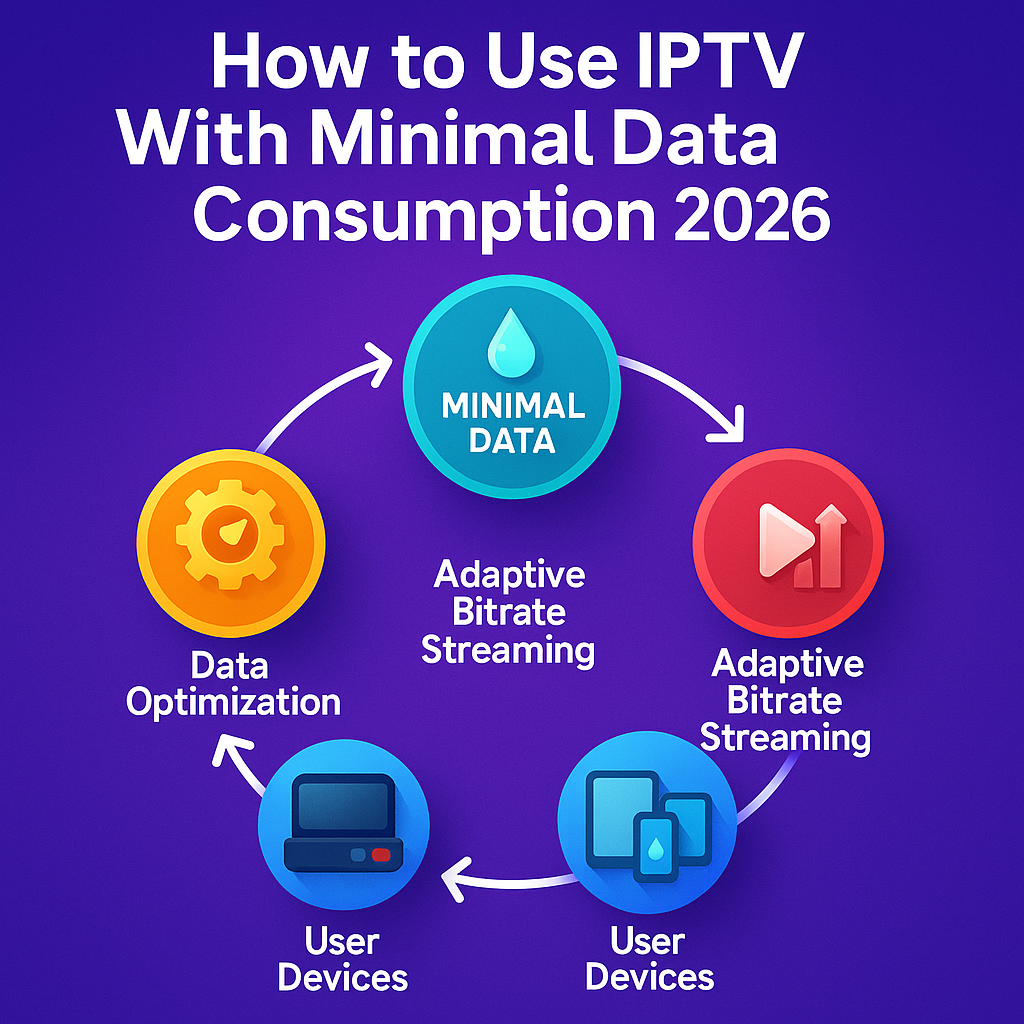
Here’s how to stream IPTV smartly so you use **very little data**:
- Step 1: Lower resolution. Use 480p or 720p instead of HD or 4K. For many screens, especially mobiles or small TVs, it’s still acceptable.
- Step 2: Enable adaptive bitrate. Let the app reduce quality automatically when bandwidth dips.
- Step 3: Use efficient codecs. Some players support AV1 or HEVC, which compress better and use less data at the same quality.
- Step 4: Cache wisely. If your IPTV app supports buffering/caching, increase buffer so it can preload fewer but larger chunks.
- Step 5: Use data-saving mode on mobile. Many IPTV apps have a “low data mode”—turn it on when you’re on limited plans.
- Step 6: Limit background streaming. Don’t have IPTV running idle on devices you’re not watching—every second eats data.
- Step 7: Monitor usage. Use apps or your ISP dashboard to see how much data IPTV is consuming. Adjust settings accordingly.
Pro tip: Download episodes ahead if your IPTV provider allows offline mode—uses zero streaming data later.
Reality Check
Here’s the truth—streaming always uses data. “Minimal consumption” is relative. If you watch a 2-hour show, even in 480p, you’ll use some GBs. Also, lower quality can mean visible pixelation on bigger screens.
By 2026, data-efficient codecs and smarter apps make a huge difference. But don’t expect 4K in low-data mode. The goal is *balance*—good enough quality with responsible usage.
FAQ
- Q: How much data does IPTV use?
A: For SD: ~0.5–1 GB/hour. HD: ~2–4 GB/hour. 4K: 8+ GB/hour (or more). - Q: Is 480p watchable on TV?
A: On small to medium TVs, yes. On very large screens, you’ll notice softness. - Q: Does a VPN increase data use?
A: Slightly. Encryption adds overhead, maybe ~5-10% extra data. - Q: Can I combine low data mode + VPN?
A: Yes, just don’t expect miracles. The VPN adds a little overhead, but the data-saving settings will still help. - Q: Which IPTV apps offer data-saving features?
A: Many modern apps in 2026 support low-data or mobile-saving modes—check settings menus.
Final Verdict
Streaming IPTV with **minimal data consumption** in 2026 is totally doable if you’re smart about resolutions, codecs, and app settings. You’ll lose some polish, but you’ll gain hours of streaming without watching your data vanish.
My verdict? Be pragmatic. Don’t chase perfect picture—chase sustainable streaming. With the right setup, you’ll enjoy IPTV all month long without blowing your data cap.
👉 Ready to explore IPTV that respects your data limits? Check here: https://www.cccam7.com/premium-iptv/