Why German Channels on Astra 19.2 Are Missing
Estimated reading time: 15 minutes.
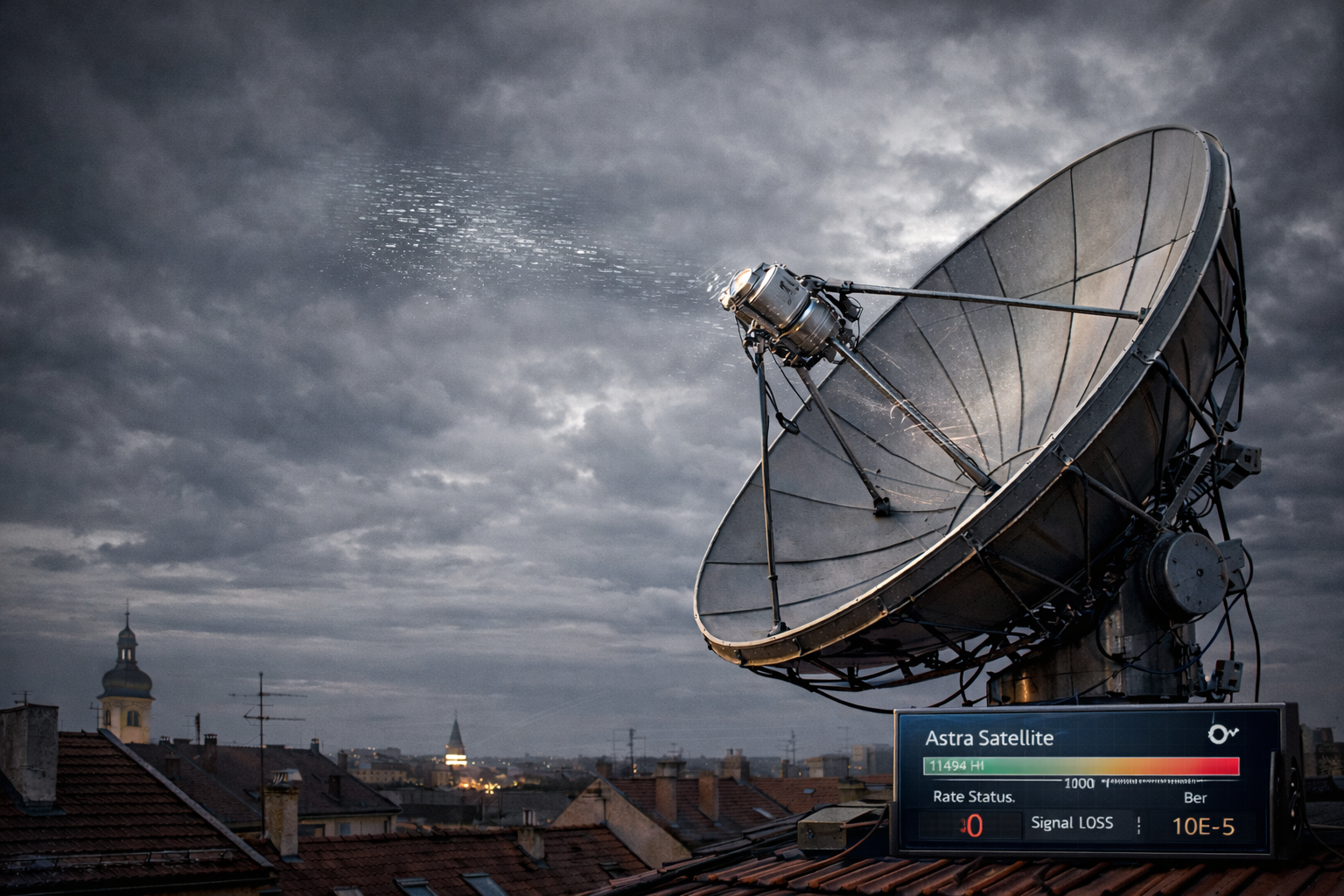
Many households across Europe rely on the Astra satellite at 19.2 degrees east to receive German television channels. When everything is configured correctly viewers can access dozens of broadcasters including public television networks entertainment channels and regional stations.
However sometimes viewers notice that certain German channels suddenly disappear or fail to appear during scanning. In most cases the satellite itself is not the problem. Missing channels are usually caused by dish alignment issues outdated receiver settings or signal stability problems inside the home installation.
Quick Context
This guide explains the most common reasons why German channels on Astra 19.2 may be missing and how satellite installations affect reception quality.
Dish alignment errors
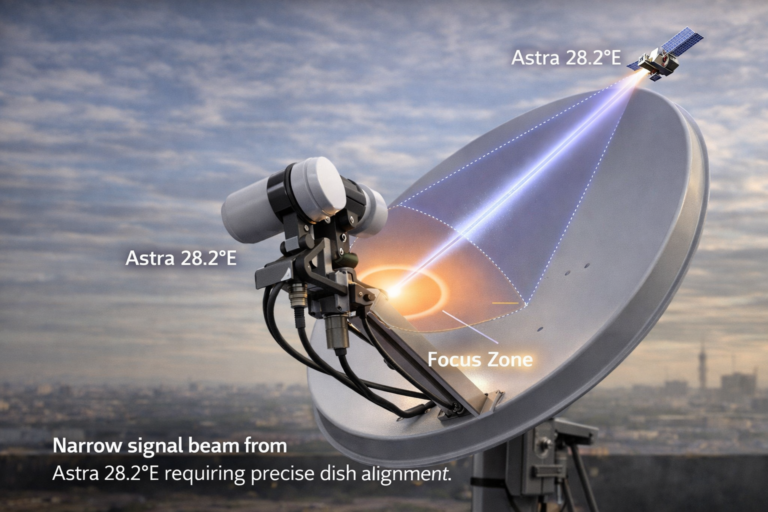
Satellite dishes must be pointed precisely toward the Astra orbital position at 19.2 degrees east. Even a small alignment deviation can prevent the receiver from detecting certain frequencies during scanning.
When the dish is slightly misaligned some channels may still appear while others disappear because different channels are broadcast on different transponders. If the receiver cannot lock onto a specific frequency the channels inside that transponder will not be detected.
Dish alignment problems are one of the most common reasons viewers report missing German channels.
Professional installers typically use signal meters to fine tune alignment until maximum signal quality is achieved.
Outdated receiver scanning data
Satellite receivers store frequency information used during channel scanning. If this information becomes outdated the receiver may skip certain transponders when searching for channels.
Broadcasters occasionally update their transmission frequencies or add new channels. Running a fresh satellite scan allows the receiver to detect these changes and update the channel list automatically.
Many modern receivers include automatic scan modes that search the entire Astra satellite spectrum to avoid missing channels.
LNB configuration problems
The LNB mounted at the front of the satellite dish collects the signal reflected by the dish. If the LNB is incorrectly positioned or rotated it may reduce signal quality.
Incorrect LNB skew angle can interfere with signal polarization. Since satellite transmissions use horizontal and vertical polarization an incorrect skew setting can cause the receiver to miss some transponders.
Adjusting the LNB angle properly helps ensure the receiver detects all available channels.
Weak satellite signal strength
Signal strength plays an important role in channel reception. If the satellite signal becomes weak the receiver may struggle to decode certain frequencies.
Weak signals can be caused by small dish sizes poor cable connections or aging equipment. Even minor signal loss may cause the receiver to skip channels during scanning.
Upgrading to higher quality cables or ensuring proper dish alignment can significantly improve signal stability.
Physical obstacles blocking the signal
Satellite signals travel directly from space to the dish. Any obstacle between the dish and the satellite can interfere with reception.
Buildings trees balconies or construction structures may block part of the signal path. If the dish does not have a clear line of sight to the satellite some frequencies may become difficult to receive.
Relocating the dish to a higher or clearer position can restore full channel reception.
Weather related signal loss
Although satellite signals are generally stable extreme weather conditions can temporarily reduce signal quality. Heavy rain snow or dense clouds may cause short signal interruptions.
These interruptions rarely cause permanent channel loss but they may temporarily prevent the receiver from locking onto weaker frequencies.
Once weather conditions improve the signal typically returns to normal.
Typical causes of missing channels
| Cause | Effect | Possible solution |
|---|---|---|
| Dish misalignment | Receiver misses certain frequencies | Realign dish toward Astra 19.2 |
| Outdated scan data | Channels not detected | Run a full satellite scan |
| Incorrect LNB skew | Polarization conflict | Adjust LNB angle |
| Weak signal strength | Unstable reception | Check cables and dish size |
| Signal obstruction | Blocked satellite path | Relocate dish installation |
Reality Check
Missing German channels on Astra 19.2 are rarely caused by the satellite itself. In most cases the issue comes from local installation factors such as dish alignment receiver scanning settings or signal obstruction.
Final Verdict
Final Verdict
Astra 19.2 continues to provide reliable access to German television channels across Europe. When channels appear to be missing the cause is usually related to dish alignment scanning settings or signal stability rather than a broadcasting problem.
Frequently Asked Questions
| Question | Answer |
|---|---|
| Why did some German channels disappear | Channels may disappear when the receiver frequency list becomes outdated or when dish alignment shifts slightly. |
| Can weather cause channel loss | Severe storms may temporarily reduce signal strength but reception usually returns when conditions improve. |
| Do I need to scan channels again | Running a new satellite scan often restores missing channels if frequencies have changed. |
| Does dish size affect channel reception | Yes larger dishes generally provide stronger signals and more stable reception. |