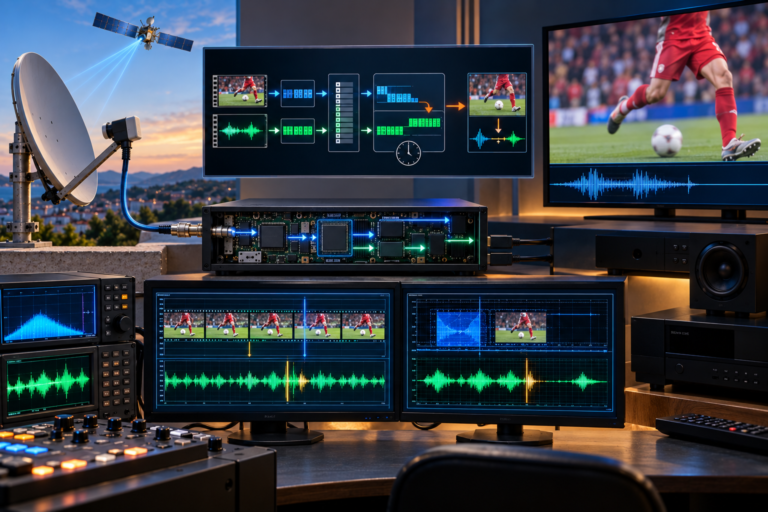
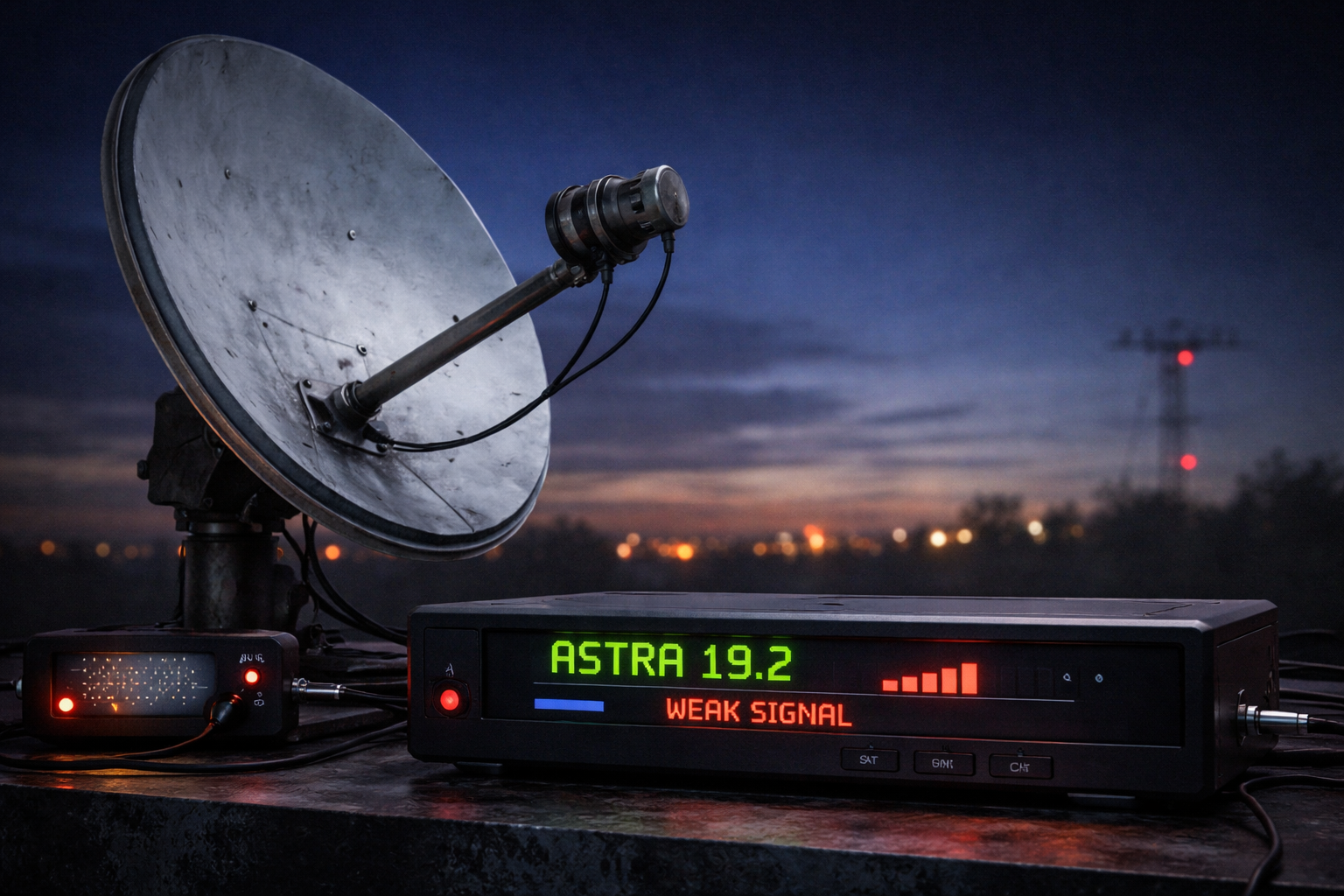
Astra 19.2 German Channels Weak Signal Fix
Estimated reading time: 15 minutes.
Weak signal on German channels while using Astra 19.2 is one of the most common and misunderstood problems in satellite setups. The picture may appear unstable, channels may freeze, or some channels may disappear completely. Many users assume this means a major hardware failure, but in most cases, the issue is related to signal quality and reception conditions.
The important point is that weak signal is not a single problem. It is the result of multiple factors working together. Dish alignment, LNB performance, cable condition, and environmental effects all play a role. Understanding how these elements interact is the key to fixing weak signal issues correctly.
Weak signal means the receiver can detect the signal but cannot maintain stable decoding. This is usually caused by poor alignment, low signal margin, LNB noise, or installation issues.
- What weak signal really means
- Signal strength vs signal quality
- Dish alignment and signal efficiency
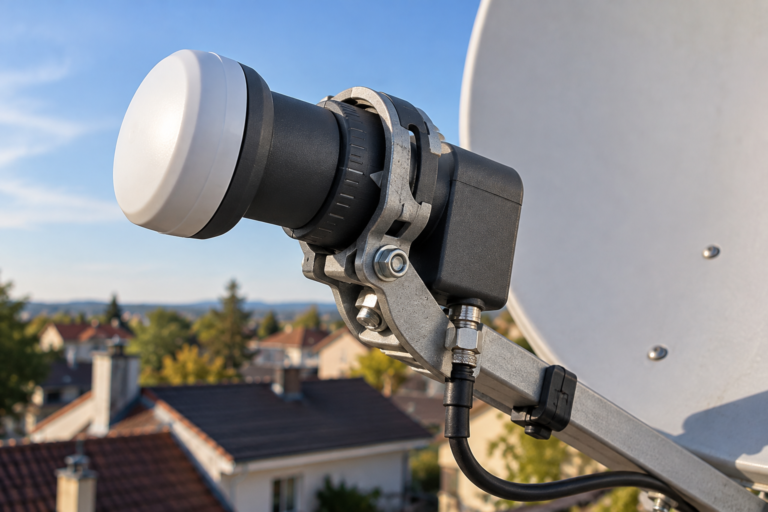
- LNB performance and noise impact
- Cable and connector signal loss
- Transponder differences and weak channels
- Environmental impact on weak signals
- Analytical weak signal table
- Step by step fix guide
- FAQ
What weak signal really means
Weak signal does not mean no signal. It means the receiver is receiving data, but the quality is not high enough for stable decoding.
In digital systems, the receiver needs a clean signal with low error rates. If errors increase, the system struggles to decode the stream, leading to instability.
This is why weak signal often appears as freezing, pixelation, or intermittent channel loss rather than complete disappearance.
Signal strength vs signal quality
Signal strength shows how much RF energy is reaching the receiver. Signal quality shows how clean and usable that signal is.
A system can have strong signal strength but poor quality due to noise or interference. In such cases, channels may not work correctly.
Improving quality is always more important than increasing strength when fixing weak signal problems.
Dish alignment and signal efficiency
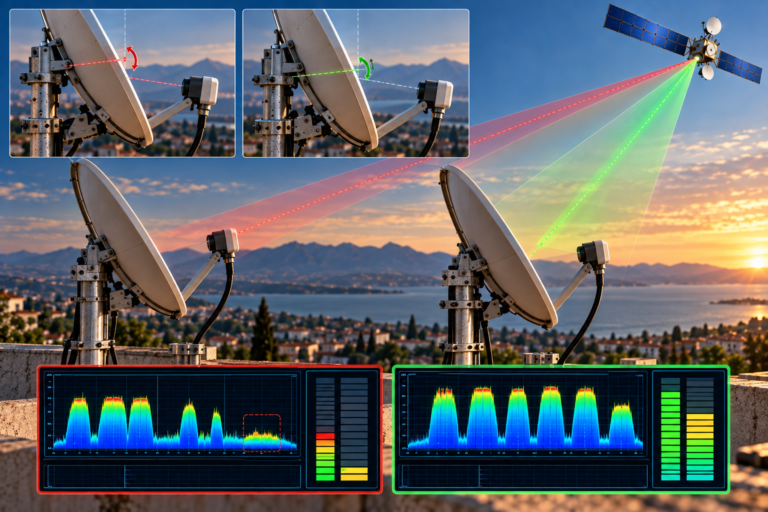
Dish alignment determines how efficiently the signal is collected. Even a small deviation can reduce signal quality significantly.
A slightly misaligned dish may still receive strong signals but struggle with weaker transponders. This creates uneven channel performance.
Precise alignment improves signal margin and stabilizes all channels.
LNB performance and noise impact
The LNB converts satellite signals into a lower frequency range. During this process, it introduces noise.
A high noise level reduces signal quality. Older or low quality LNBs may also have unstable frequency conversion, affecting decoding performance.
Replacing a weak LNB can significantly improve signal stability.
Cable and connector signal loss
Signal loss can occur in cables and connectors. Poor quality cables, long runs, or damaged connectors reduce signal quality.
Even small losses can push weak signals below the decoding threshold.
Ensuring proper cable quality and connections is essential for stable reception.
Transponder differences and weak channels
Not all transponders are equal. Some have stronger signal margins, while others are more sensitive to alignment and noise.
This is why some German channels work perfectly while others appear weak or unstable.
Understanding this helps identify whether the problem is general or limited to specific transponders.
Environmental impact on weak signals
Weather conditions such as rain reduce signal quality. Weak signals are affected first.
Obstacles like trees or buildings can also block or weaken the signal path.
Environmental factors often expose weak points in the installation.
Analytical weak signal table
| Symptom | Cause | Meaning | Action |
|---|---|---|---|
| Channels unstable or freezing | Low signal quality | Weak decoding | Adjust dish |
| Some channels weak others strong | Transponder differences | Uneven signal margin | Fine tune alignment |
| Signal drops during rain | Low margin | Weak setup | Improve installation |
| Pixelation on specific channels | LNB noise | Hardware issue | Replace LNB |
| Signal fluctuates | Cable loss | Connection problem | Check cables |
Step by step fix guide
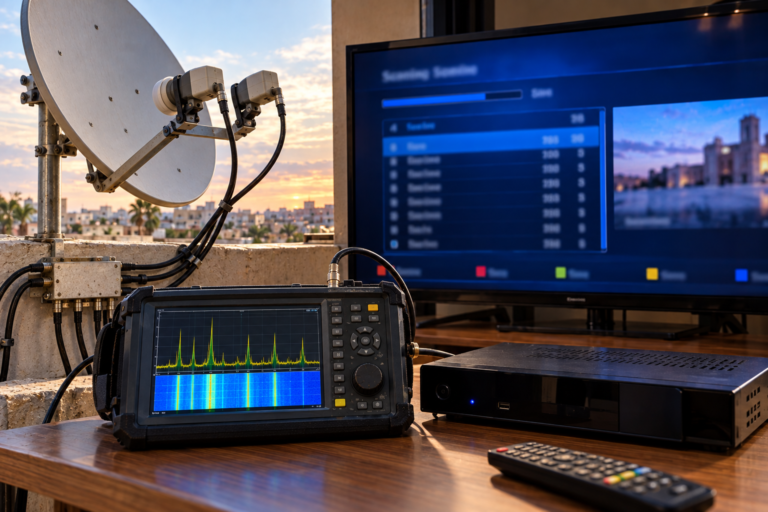
Start by checking signal quality on your receiver. Identify which channels are weakest.
Adjust the dish alignment carefully. Small movements can improve signal significantly.
Inspect the LNB and replace it if necessary.
Check cables and connectors for damage or poor connections.
Ensure there are no obstacles blocking the signal path.
Test the system under normal conditions to confirm improvements.
Weak signal problems are usually caused by small inefficiencies in the system, not major failures. Fixing alignment and hardware quality often solves the issue completely.
Fixing weak signal on Astra 19.2 German channels requires understanding how signal quality works. By improving alignment, hardware, and installation conditions, you can restore stable reception and eliminate channel issues.
FAQ
| Question | Answer |
|---|---|
| What causes weak signal on Astra 19.2 | Usually alignment issues, LNB noise, or cable losses. |
| Does signal strength matter | Yes, but signal quality is more important. |
| Can LNB affect signal strength | Yes. A poor LNB reduces signal quality. |
| Why are some channels weaker than others | Because they are on different transponders with different signal margins. |
| Should I replace hardware immediately | No. First check alignment and connections. |